

Small business owner comparing secured and unsecured loan options at an office desk
Is a Small Business Loan Secured or Unsecured

Content
Small business loans come in two fundamental forms: secured and unsecured. The answer to whether your loan falls into one category or the other depends entirely on whether you pledge assets as collateral. Secured loans require you to back the borrowed funds with business or personal property, while unsecured loans rely solely on your creditworthiness and business performance. Most lenders offer both options, but the type you qualify for—and the terms you receive—will vary dramatically based on your business profile, financial history, and the assets you can offer.
Understanding this distinction matters because it affects everything from your approval odds to the interest rate you'll pay and what you stand to lose if your business hits rough waters. The choice between secured and unsecured financing isn't just a technical detail; it's a strategic decision that can shape your company's financial flexibility for years.
What Makes a Business Loan Secured or Unsecured
The core difference between these loan types centers on collateral. A secured business loan explained simply: you pledge specific assets—equipment, real estate, inventory, or accounts receivable—that the lender can seize and sell if you default. The lender files a lien against these assets, creating a legal claim that stays in place until you repay the debt in full.
An unsecured business loan explained with equal clarity: no collateral backs the loan. The lender extends credit based on your business's financial strength, revenue history, credit scores, and future earning potential. If you default, the lender cannot automatically take your assets. Instead, they must pursue collection actions, potentially suing you and obtaining a judgment before seizing property.
This fundamental structure creates a cascade of differences. Secured lenders accept lower risk because they have a recovery mechanism built into the loan agreement. Unsecured lenders face higher risk, which they offset through stricter qualification standards and higher interest rates. The presence or absence of collateral becomes the pivot point for nearly every other loan characteristic.
Author: Matthew Redford;
Source: nayiyojna.com
How Secured Business Loans Work
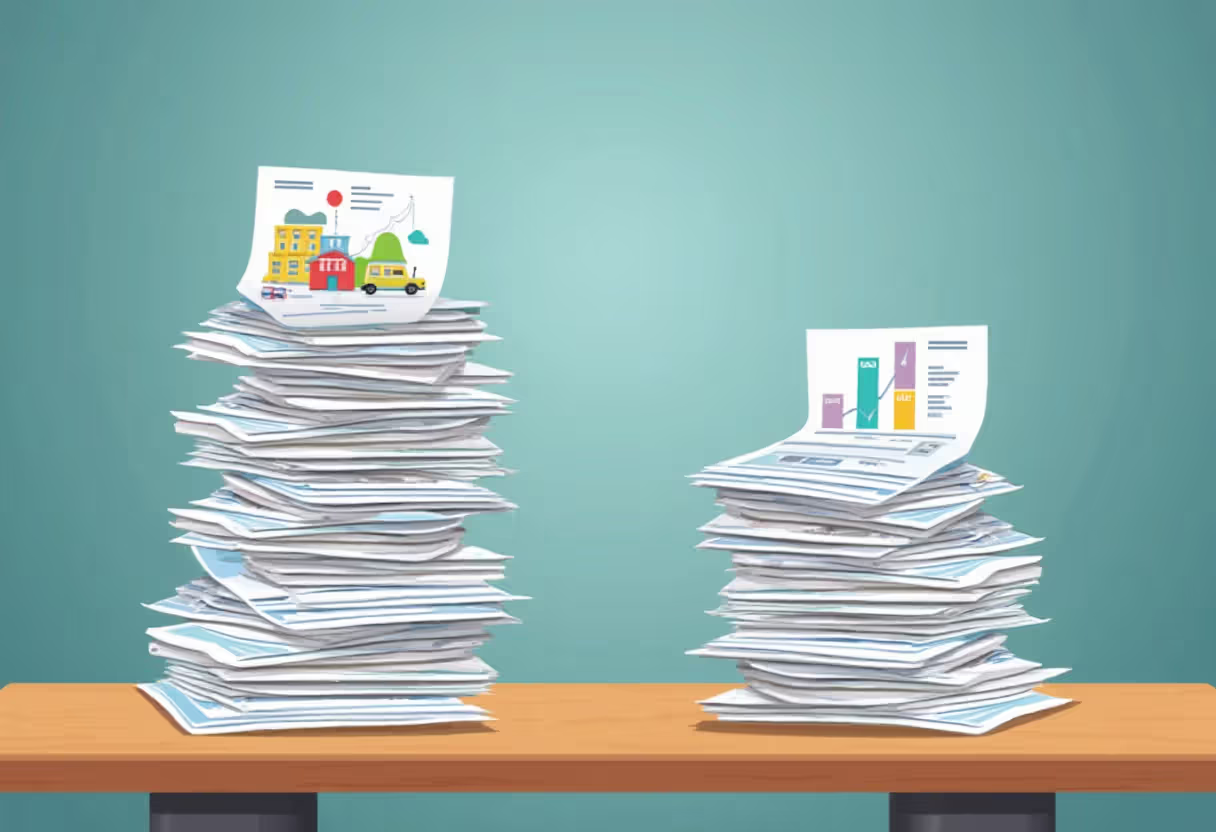
When you apply for a secured loan, the lender evaluates both your creditworthiness and the value of your proposed collateral. The approval process typically involves an appraisal or valuation of the assets you're pledging. Lenders rarely lend the full appraised value—most cap the loan at 70-85% of the collateral's worth to protect against value depreciation and liquidation costs.
Once approved, you sign a security agreement granting the lender a security interest in the specified assets. The lender files a UCC-1 financing statement with your state, creating a public record of their claim. For real estate collateral, they record a mortgage or deed of trust with the county. These filings ensure other creditors know the lender has first claim on those assets.
You retain use of the collateral during the loan term—you can operate equipment, sell inventory in the normal course of business, or occupy mortgaged property. But you cannot sell major collateral items without the lender's permission, and you must maintain adequate insurance on pledged assets.
Common Collateral Requirements for Business Loans
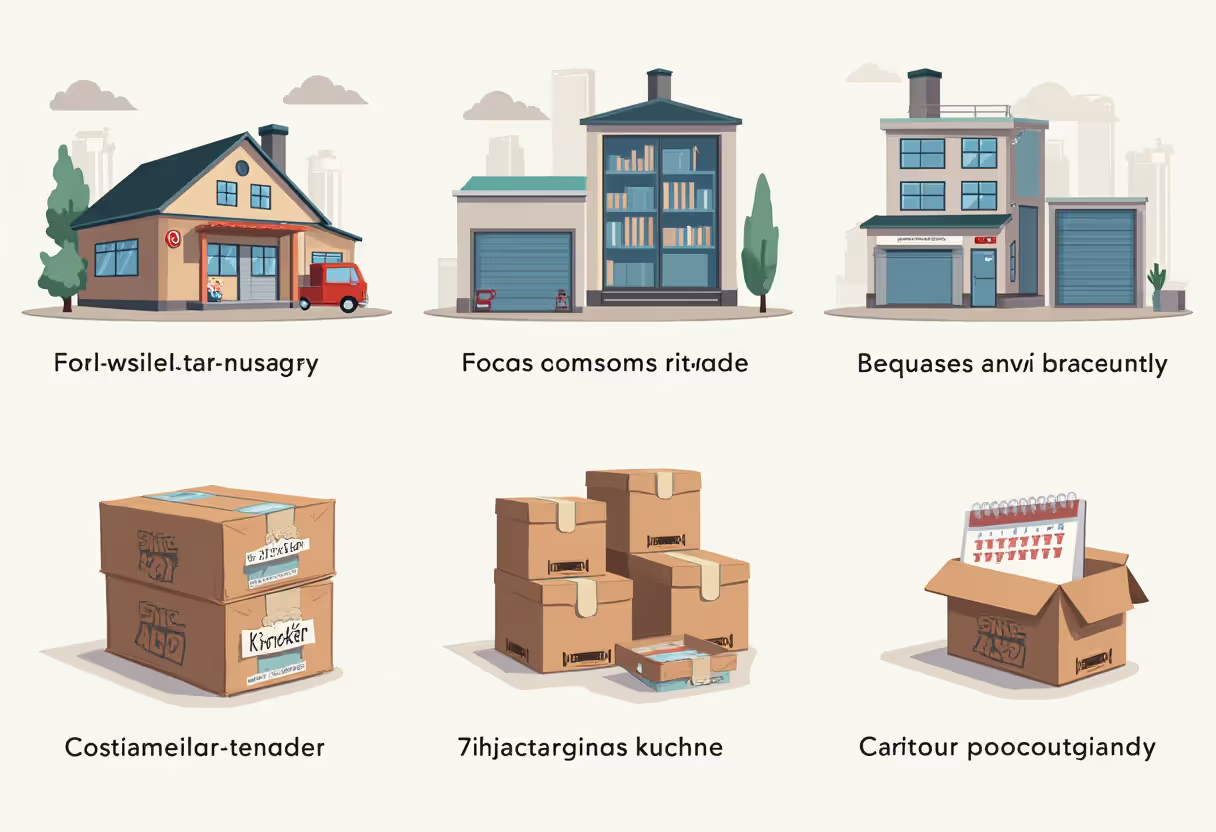
Equipment financing uses the purchased equipment itself as collateral, making it one of the most straightforward secured loan types. Commercial real estate loans require the property as collateral, with lenders typically demanding 20-30% down payment.
Working capital loans might accept a blanket lien on all business assets—inventory, equipment, furniture, and receivables. Some lenders accept accounts receivable alone, advancing 70-85% of eligible invoice values. Business owners with significant personal assets sometimes pledge personal real estate or investment accounts, particularly when business assets alone don't cover the loan amount.
Lenders scrutinize collateral quality closely. They prefer assets that hold value well, sell easily, and relate directly to your business operations. A restaurant's kitchen equipment works better as collateral than specialized manufacturing machinery with limited resale markets. Real estate typically provides the strongest collateral because values remain relatively stable and secondary markets exist everywhere.
Author: Matthew Redford;
Source: nayiyojna.com
Typical Interest Rates and Terms
Secured business loans in 2026 generally carry interest rates between 5% and 12%, depending on your credit profile, collateral quality, and loan size. Strong borrowers with prime real estate collateral might secure rates in the 5-7% range, while those with weaker credit or less liquid collateral see rates closer to 10-12%.
Terms extend longer than unsecured loans—often five to ten years for equipment loans, up to 25 years for commercial real estate. These extended terms reduce monthly payments, improving cash flow management. Loan amounts range from $50,000 to several million dollars, with upper limits determined by collateral value rather than arbitrary caps.
Many secured lenders impose fewer restrictive covenants than unsecured lenders because the collateral provides protection. You might face fewer requirements around maintaining specific debt-to-income ratios or cash reserves, though most loans still include basic financial reporting requirements.

Author: Matthew Redford;
Source: nayiyojna.com
How Unsecured Business Loans Work
Unsecured lenders compensate for the absence of collateral by scrutinizing your business's financial health intensively. They analyze revenue trends, profitability, cash flow patterns, existing debt obligations, and industry risk factors. Your personal credit score carries significant weight—most unsecured lenders require scores above 650, with the best rates reserved for scores above 720.
The approval process moves faster than secured loans because no appraisals or lien filings are needed. Some online lenders approve unsecured loans within 24-48 hours, funding accounts within a week. Traditional banks take longer but still process unsecured applications more quickly than secured ones.
Most unsecured business loans include a personal guarantee, where you pledge your personal assets and creditworthiness without specifying particular collateral. If the business defaults, the lender can pursue your personal assets through legal action, but they must go through collection and judgment processes first—they cannot simply seize assets as they could with a secured loan.
Credit and Revenue Requirements
Unsecured lenders typically require minimum annual revenues between $100,000 and $250,000, depending on the loan amount. They want to see consistent revenue for at least one to two years, though some alternative lenders work with businesses operating for just six months if revenues are strong.

Author: Matthew Redford;
Source: nayiyojna.com
Personal credit scores matter enormously. Scores below 650 disqualify you from most unsecured products, while scores in the 650-680 range limit you to higher-interest options. Above 720, you access the best rates and largest loan amounts.
Debt service coverage ratio—your ability to cover loan payments from operating cash flow—must typically exceed 1.25:1. Lenders want to see that your business generates at least 25% more cash than needed to cover all debt payments, including the new loan.
Industry matters too. Lenders view restaurants, retail stores, and construction companies as higher risk than professional services, software companies, or healthcare practices. Your industry classification affects approval odds and rates even when other metrics match.
Typical Interest Rates and Terms
Unsecured business loans carry higher interest rates than secured loans, typically ranging from 8% to 30% in 2026. Bank unsecured loans for prime borrowers might start around 8-10%, while online lenders and alternative financing companies charge 12-25% for average-credit borrowers. Short-term working capital loans and merchant cash advances (technically not loans but similar products) can reach effective annual rates of 30% or higher.
Loan amounts run smaller than secured loans—typically $10,000 to $500,000, with most falling in the $50,000 to $250,000 range. Terms are shorter, usually one to five years, with many online lenders offering one- to three-year terms. These shorter terms mean higher monthly payments but less total interest paid over the loan life.
Many unsecured lenders impose financial covenants requiring you to maintain minimum cash balances, limit additional debt, or meet revenue targets. These covenants give lenders some control despite lacking collateral, allowing them to demand early repayment if your business deteriorates.
Key Differences Between Secured and Unsecured Business Financing
The collateral requirement creates ripple effects across every loan dimension. Approval difficulty varies substantially: secured loans accept lower credit scores and shorter business histories because collateral reduces lender risk. Unsecured loans demand stronger financial profiles to compensate for the lack of asset backing.
Interest rates reflect risk pricing. Secured loans cost less because lenders can recover funds through collateral sales. Unsecured loans cost more because default losses are higher—lenders price this risk into every loan.
Loan amounts diverge significantly. Secured loans can reach millions of dollars when backed by valuable real estate or equipment. Unsecured loans rarely exceed $500,000 because lenders limit exposure when they cannot seize assets directly.
| Feature | Secured Business Loan | Unsecured Business Loan |
| Collateral Requirement | Required—specific assets pledged | None—no assets pledged |
| Typical Interest Rates | 5-12% | 8-30% |
| Loan Amounts Available | $50,000-$5,000,000+ | $10,000-$500,000 |
| Approval Difficulty | Moderate—depends on collateral value | Higher—depends on credit and revenue |
| Time to Funding | 2-6 weeks (appraisals, liens) | 1-2 weeks (faster for online lenders) |
| Risk to Borrower | Asset seizure upon default | Credit damage, legal action, personal asset pursuit |
| Best For | Established businesses with assets, larger funding needs, longer terms | Businesses without collateral, faster funding needs, smaller amounts |
Repayment terms extend longer for secured loans, reducing payment pressure. Unsecured loans compress into shorter terms, increasing monthly obligations but limiting long-term interest costs.
The application process differs in complexity and speed. Secured loans require appraisals, title searches, and lien filings, adding weeks to the timeline. Unsecured loans skip these steps, sometimes funding within days.
Risk Differences in Business Loan Security
The consequences of default diverge sharply between loan types. With a secured loan, default triggers the lender's right to seize and sell your collateral. This process varies by collateral type—equipment lenders can repossess machinery, real estate lenders can foreclose, and blanket lien holders can liquidate inventory and receivables.
The speed of asset loss matters. Equipment repossession can happen within weeks of default. Foreclosure takes longer—typically three to six months—but still results in property loss. You lose not just the asset but any equity you've built. If you've paid down 40% of an equipment loan and default, you lose the equipment and the 40% equity you created.
Secured loan defaults damage your credit, but the asset seizure often satisfies the debt, limiting further collection activity. If the collateral sale doesn't cover the full debt, you remain liable for the deficiency, but many lenders write off small deficiencies rather than pursue costly collection.
Unsecured loan defaults follow a different path. The lender cannot immediately seize assets, but they will report the default to credit bureaus, devastating your personal and business credit scores. They'll likely demand the full balance immediately due to acceleration clauses in the loan agreement.
Collection actions escalate from demand letters to lawsuits. If the lender sues and wins a judgment, they can garnish business bank accounts, place liens on real estate, or seize assets through court orders. The personal guarantee most unsecured loans require means your personal assets—home, vehicles, savings—become vulnerable once the lender obtains a judgment.
The risk differences in business loan security extend beyond default scenarios. Secured loans limit your financial flexibility because you cannot freely sell or refinance pledged assets. If your business needs to relocate and you've mortgaged your current property, you cannot sell without paying off the loan or getting lender approval.
Unsecured loans preserve asset flexibility but create cash flow pressure through higher interest rates and shorter terms. The monthly payment on a $100,000 unsecured loan at 15% over three years exceeds $3,400, while a secured loan at 8% over seven years costs just $1,500 monthly—a difference that can strain working capital.
Which Type of Business Loan Is Right for Your Company
The decision framework starts with honest assessment of your collateral position. Businesses owning valuable equipment, real estate, or substantial inventory should seriously consider secured loans. The interest savings over a five-year term can reach tens of thousands of dollars, money better spent on growth than interest payments.
Businesses lacking significant assets—service companies, consultancies, agencies, software firms—have limited secured loan options. These companies should focus on building strong credit profiles and consistent revenues to qualify for competitive unsecured loans.
Your credit profile shapes your options. Personal credit scores above 720 and two-plus years of strong business revenues open doors to favorable unsecured terms. Scores below 650 or inconsistent revenues push you toward secured loans, where collateral compensates for credit weaknesses.
The funding amount needed matters. Small loans under $100,000 often work fine as unsecured products, especially when you need quick funding. Larger amounts—$250,000 and above—typically require secured loans unless your business shows exceptional financial strength.
Time sensitivity influences the choice. Unsecured loans fund faster, making them better for time-critical opportunities or emergencies. Secured loans require patience but reward it with better terms.
Risk tolerance plays a role. Business owners uncomfortable pledging personal assets or risking foreclosure might prefer unsecured loans despite higher costs. Those confident in their business's trajectory might embrace secured loans to minimize interest expenses.
The collateral decision isn't just financial—it's psychological. I've seen business owners lose sleep over secured loans even when the numbers make perfect sense, and I've seen others comfortably pledge assets because they're confident in their cash flow. The best loan is the one you can afford and sleep with at night. Run the numbers, but also check your gut. If pledging your building makes you anxious about every slow month, the interest savings might not be worth the stress
— Jennifer Martinez
Startups face the toughest choices. Most lack both collateral and the credit history for favorable unsecured terms. Startup founders often must provide personal collateral—home equity or investment accounts—to secure business loans, or accept expensive unsecured products from alternative lenders. Some bootstrap longer to avoid unfavorable loan terms, while others seek equity investors instead of debt.
Frequently Asked Questions About Business Loan Security
Choosing between secured and unsecured business financing requires balancing multiple factors: the assets you own, your credit profile, the amount you need, how quickly you need it, and your comfort with risk. Secured loans reward asset-rich businesses with lower rates and larger amounts but put those assets on the line. Unsecured loans provide faster access and preserve asset flexibility but cost more and limit borrowing capacity.
Neither option is universally superior. The right choice depends on your specific business situation, financial strength, and strategic goals. Businesses with valuable collateral and patience for longer approval processes usually benefit from secured loans' economic advantages. Those needing speed, lacking assets, or uncomfortable pledging property often find unsecured loans more practical despite higher costs.
Before committing to either path, calculate the total cost difference over the full loan term, honestly assess your default risk, and consider how the loan structure affects your business operations. The few weeks spent making an informed decision can save you thousands of dollars and significant stress over the years ahead.