

Borrower reviewing student loan payment options at home
Does Student Loan Forbearance Affect Credit Score

Content
When your student loan payments become unaffordable, forbearance might seem like the obvious escape route. But here's what keeps borrowers up at night: will hitting pause on those payments wreck the credit score you've spent years building?
Here's the reality: forbearance won't trash your credit—assuming you time it right and follow specific rules. Miss those rules? You'll create exactly the credit disaster you were trying to avoid.
Most borrowers don't realize that the real danger isn't forbearance itself. It's the small mistakes surrounding it: submitting your application two days too late, assuming payments stop before approval arrives, or blanking on the restart date when forbearance ends. I've seen credit scores drop 90 points because someone thought their forbearance request meant they could skip that month's payment immediately.
Let's break down what actually happens to your credit when you use forbearance, which mistakes cause real damage, and how to protect your score throughout the entire process.
How Student Loan Forbearance Works
Forbearance puts your monthly payments on hold temporarily. You're not off the hook—every dollar you owe still exists, and interest keeps piling up on nearly all loan types. Your balance actually grows larger while you're not paying anything.
Federal loans offer two distinct forbearance categories:
General forbearance (sometimes called discretionary) requires your servicer's approval. You'll need to demonstrate financial difficulties, unexpected medical bills, or employment problems. Servicers can grant up to 12 months per request, though you're capped at three years total across your lifetime.
Mandatory forbearance works differently—servicers must approve you if you fit specific situations. Examples: you're completing a medical residency, your federal loan payments consume more than 20% of gross monthly income, or you're serving in AmeriCorps. These also come in 12-month blocks.
Private lenders? Each one makes up their own rules. Some allow three months of forbearance total, ever. Others might offer six months. Many private lenders skip forbearance entirely and push you toward alternative arrangements.
People request forbearance when other options have dried up—deferment doesn't fit their situation, income-driven repayment plans still demand too much, or they're between jobs and need a few months of breathing room.

Author: Matthew Redford;
Source: nayiyojna.com
What Happens to Your Credit Score During Forbearance
Here's what catches everyone off guard: entering forbearance with current, up-to-date accounts does absolutely nothing to your credit score. Zero impact. Your score won't budge simply because payments stopped.
Credit reporting laws require servicers to mark your account accurately. During approved forbearance periods, your loans get reported as "current" or tagged with "in forbearance" status—never as missed or late payments. Your payment history drives 35% of your credit score calculation, so keeping that "current" designation protects everything you've built.
But there's a major catch. Were you already 30 days behind when you applied? 60 days? Those delinquency marks stick around. Forbearance freezes new damage—it doesn't repair old damage.
Here's where borrowers shoot themselves in the foot: they submit a forbearance request on Tuesday and immediately stop paying. Problem is, servicers need 7-14 business days to process applications. If your payment due date hits during that processing window and you don't pay, boom—you've created a 30-day late mark. Keep paying until you've got written proof that forbearance started.
Everything else stays the same. Your credit utilization percentage? Unchanged. Mix of account types? Same. Age of accounts? Still aging normally. The only thing that shifts is how your student loan account status reads on your report.
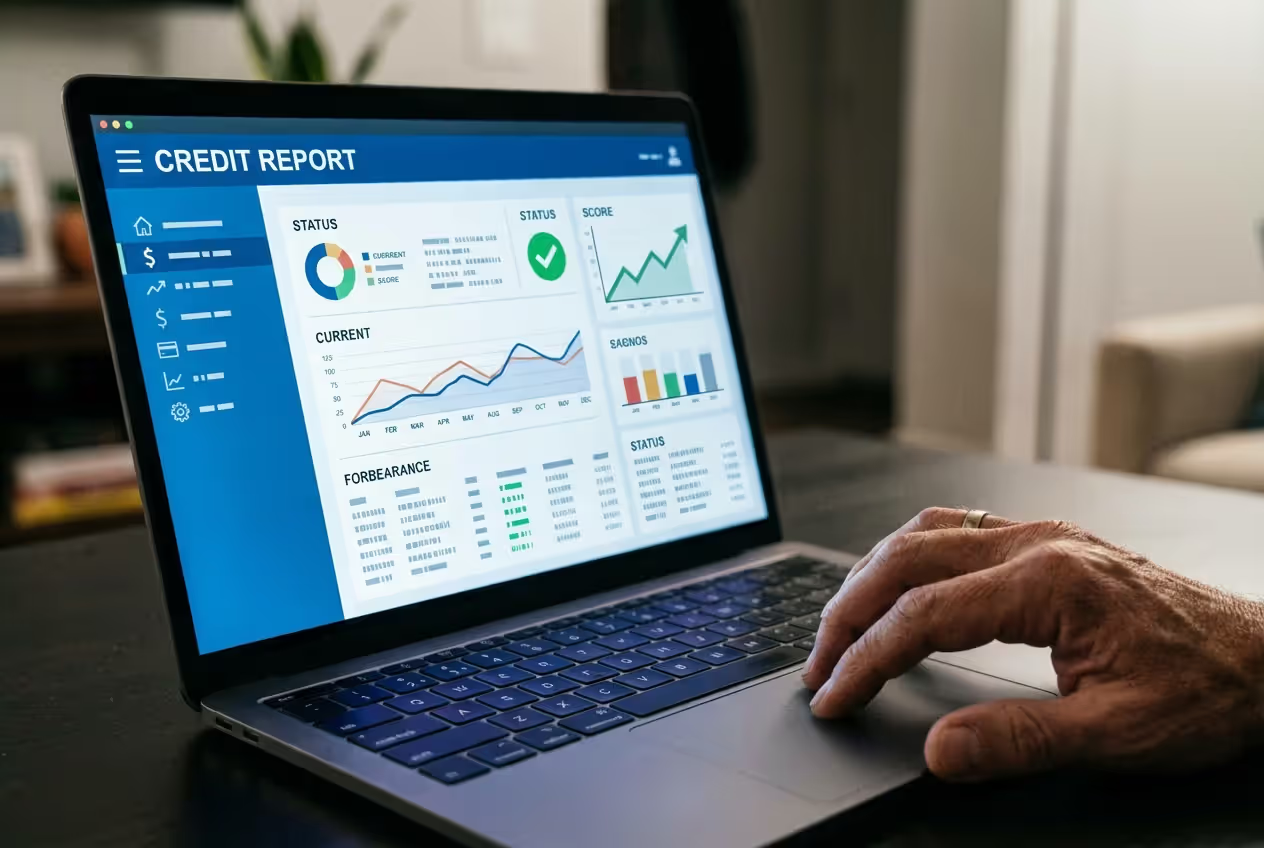
How Forbearance Appears on Your Credit Report
Pull your report from Equifax, Experian, or TransUnion right now, and forbearance won't look like a warning sign. Your student loans will show an account status code—usually "current" or some variation indicating deferred/forbearance, depending on your servicer's reporting style.
Federal loan servicers typically add a special comment code instead of changing your main payment status. Lenders examining your credit can spot the forbearance notation buried in account details, but it doesn't trigger the same algorithmic red flags as an actual missed payment.
This distinction matters enormously for automated lending systems. An account marked "current" during forbearance might sail through initial credit checks for mortgages or car financing. A single 30-day late payment? That triggers immediate application flags and potential denial.
Certain servicers report accounts as "deferred"—technically a different status than forbearance but with identical credit implications. What matters: both should display zero past-due balance and zero late payment marks while forbearance remains active.
Will forbearance follow you forever on credit reports? The forbearance status itself disappears once you restart payments—your account updates to show active repayment again. However, late payments that happened before forbearance began will haunt your report for seven years from the original delinquency date.
Author: Matthew Redford;
Source: nayiyojna.com
Forbearance vs Deferment: Which Is Better for Your Credit
Borrowers constantly mix these up, but here's the truth: forbearance and deferment hit your credit identically. Neither one damages your score, provided your accounts were current when you entered either program.
The actual differences show up in eligibility requirements, how interest gets handled, and what you'll ultimately pay back:
| Feature | Forbearance | Deferment |
| Credit score impact | Zero impact when accounts are current | Zero impact when accounts are current |
| How it appears on credit report | Typically "Current" or "Forbearance" notation | Usually "Current" or "Deferred" notation |
| Interest accrual | Continues accumulating on every loan type | Subsidized federal loans: government pays interest; Unsubsidized/private loans: interest still grows |
| Eligibility requirements | Servicer's discretion or meeting mandatory forbearance criteria | Strict qualification rules: active unemployment, cancer treatment, documented economic hardship |
| Best for | Fast relief when deferment requirements don't match your situation | Extended hardship periods if you meet qualification standards |
Deferment offers a massive financial edge if you're carrying subsidized federal loans: the government covers interest during unemployment deferment, economic hardship deferment, and cancer treatment deferment. Your loan balance stays frozen instead of growing.
Forbearance? Interest never stops, and when forbearance ends, all that accumulated interest capitalizes—gets added onto your principal balance. Now you're paying interest on interest, which increases both your total payoff amount and future monthly bills.
From a credit-only perspective, neither wins. But qualifying for deferment with subsidized loans saves you real money without adding any credit risk whatsoever. If you've only got unsubsidized loans or can't meet deferment requirements, forbearance delivers the same credit protection.
My clients constantly worry forbearance will destroy their credit scores. When you follow the process correctly—applying before any payments are missed and resuming payments on schedule afterward—forbearance is completely invisible to credit scoring. The actual danger zone is what happens after forbearance expires, when borrowers haven't prepared to restart payments and accidentally default
— Jennifer Martinez
Common Credit Mistakes Borrowers Make During Forbearance
Forbearance itself is credit-neutral, but borrowers routinely make mistakes that cause genuine damage:
Applying after the payment deadline passes tops the list. Wait until three days after your payment due date to submit your application? That missed payment gets reported to credit bureaus before forbearance even begins. One 30-day late payment can crater your score by 60-110 points, depending on your credit history. Submit applications at least two weeks ahead of your next due date, minimum.

Author: Matthew Redford;
Source: nayiyojna.com
Assuming COVID-era rules still apply creates massive confusion. During the pandemic payment pause through 2023, federal loans entered administrative forbearance automatically—no application needed. Some borrowers now think all forbearance works automatically. Wrong. Standard forbearance demands active applications, and discretionary forbearance can be denied.
Skipping credit report checks during forbearance means servicer mistakes go unnoticed for months. Servicers occasionally screw up reporting—showing missed payments during approved forbearance periods. Pull your free reports from AnnualCreditReport.com every 3-4 months while forbearance is active to catch errors quickly.
Neglecting other accounts becomes a psychological trap. When student loan payments disappear from your monthly budget (even legitimately), some borrowers start letting credit card bills or car payments slip too. Your credit card and auto loan payment records still matter tremendously. Forbearance protects your student loan payment history—nothing else. Late payments on other accounts will demolish your score just as badly as late student loan payments would.
Forgetting expiration dates creates instant delinquency. Forbearance periods don't auto-renew. Your 12-month forbearance expires on July 15th, you haven't resumed payments or requested another forbearance period, and a payment comes due July 20th? You're delinquent the moment that payment is missed.
Overlooking income-driven repayment options means borrowers use forbearance when they'd actually qualify for $0 monthly payments under IDR plans. A $0 payment through an income-driven plan counts as an on-time payment for credit purposes and makes progress toward eventual loan forgiveness. Forbearance accomplishes neither of those things.
What Happens to Your Credit After Forbearance Ends
Credit outcomes after forbearance depend entirely on your next move. Resume making full, on-time payments the moment forbearance expires? Your credit continues perfectly unaffected. Your account status flips from "forbearance" back to "current/paying as agreed," and your positive payment history starts rebuilding.
The danger period is those first 30 days after expiration. Your servicer sends notices about payment resumption, including your new payment amount (often higher because accumulated interest gets capitalized into your principal). Miss that first payment back? You've just created a 30-day delinquency that erases every bit of credit protection forbearance provided.
Enroll in autopay before forbearance ends. Most servicers knock 0.25% off your interest rate for autopay, and it eliminates any chance of accidentally missing the restart date.
Can't afford payments when forbearance wraps up? You've got several options before things spiral into default:
Income-driven repayment plans recalculate payments based on your current income and household size. Low enough income? Your payment might land at $0-50 monthly, far more manageable than standard $300-500 payments.
Extended repayment stretches your repayment timeline to 25 years, shrinking monthly payments without requiring the income documentation that IDR plans demand.
Additional forbearance or deferment might remain available if you haven't hit your lifetime limits, though you're just delaying the inevitable problem.
Loan rehabilitation applies after you've already defaulted. Make nine on-time payments within ten months, and the default status vanishes from your credit report—though the late payments leading to default stick around for seven years.
Post-forbearance missed payments follow standard delinquency timelines: 30 days late triggers credit report damage, 90 days late severely crushes your score, and 270 days late (for federal loans) pushes you into default status. Default creates catastrophic credit consequences—scores typically plummet 100+ points, and that default mark remains visible for seven full years.
Private loans default faster—many at 120 days—and can trigger lawsuits and wage garnishment considerably quicker than federal loans.
View forbearance as temporary relief, never as a permanent fix. Use those forbearance months to genuinely improve your financial situation: pick up side income, slash expenses, or research sustainable long-term repayment solutions. Don't just stick your head in the sand until forbearance expires and the problem explodes.

Author: Matthew Redford;
Source: nayiyojna.com
Frequently Asked Questions About Forbearance and Credit
Student loan forbearance won't damage your credit score when used correctly—meaning you enter with current accounts and restart payments on schedule afterward. The forbearance notation shows up on credit reports temporarily but doesn't trigger the same scoring penalties that missed payments create. Whether you select forbearance or deferment, credit impact remains neutral, though deferment delivers financial advantages for subsidized loan holders.
Real credit risks come from borrower errors: submitting applications too late, missing the payment restart date, or neglecting other debts while forbearance is active. View forbearance as a short-term tool for stabilizing finances, never as long-term avoidance.
Before your forbearance period expires, investigate income-driven repayment plans, extended repayment schedules, or other alternatives providing sustainable long-term solutions. Check your credit reports during and after forbearance to identify servicer errors quickly. With proper planning, forbearance delivers breathing room without sacrificing the credit score you've worked years to build.