
Driver looking at expired car insurance notice on smartphone while sitting in parked car
Insurance Lapse Guide for Policyholders

Content
Your car insurance expired three weeks ago. Not because you wanted to drop it—you got slammed at work, the payment email ended up in spam, and here you are driving to the grocery store with nothing protecting you.
No warning letter. No phone call from your agent. The coverage just stopped. Now you're facing years of financial fallout, and technically you're breaking state law every time you back out of your driveway.
This guide explains how policies actually lapse, the realistic timeline for fixing things, and the specific moves that keep this from happening in the first place.
What Is an Insurance Lapse?
An insurance lapse starts the exact moment your policy dies because you didn't pay or forgot to renew. After that second, you're completely exposed.
Most lapses trace back to four scenarios:
Missed premium payments: The due date passed. Your insurer got nothing. Sometimes it's genuine forgetfulness. Other times rent cleared first and the insurance charge bounced.
Ignored renewal documents: Those envelopes from your carrier sat on the kitchen counter for weeks. The deadline was twelve days ago. Your policy's now expired.
Payment method failures: Your debit card expired last May. The automatic charge didn't go through. If you don't catch it during your grace window, protection disappears.
Address changes: You moved in March but updated your policy address in August. Every reminder went to whoever lives in your old apartment now.
Lapses differ from cancellations in one major way: nobody made a decision. Cancellation means someone actively chose to end things—you called and terminated coverage, or your insurer formally dropped you. Lapses happen because nothing happened. You didn't pay. The policy expired on autopilot.
State regulations force insurers to warn you before cutting coverage. They'll send notices—usually several. But once their final deadline hits without payment? Coverage stops that day. Not when you remember to call back. That specific date on the calendar.
All benefits vanish at the lapse point. Got a whole life policy with $15,000 in built-up cash value? Depending on your contract language, that money might evaporate or get eaten up by outstanding loans against the policy. File a claim for yesterday's fender-bender—just one day after lapsing? Automatic denial, zero wiggle room, no second chances.

Author: Matthew Redford;
Source: nayiyojna.com
What Happens When Your Insurance Lapses
The damage hits fast and sticks around.
Protection disappears the instant your lapse date arrives. You cause a four-car pileup the day after auto coverage ends? You're writing personal checks for everyone's hospital stays, car repairs, and rental vehicles. We're talking $75,000, maybe $150,000, sometimes half a million. Your retirement accounts, home equity, future paychecks—all exposed to lawsuits.
You're breaking the law from the second your auto insurance lapses. Every state requires car coverage. Get caught driving without it, and you're looking at fines from $150 to $5,000 depending on where you live. Second offense? Some states pull your license for a year. Third strike in states like Texas? They can tow and impound your car. Police run automatic plate scanners nowadays—you might not know you're busted until you see the flashing lights.

Author: Matthew Redford;
Source: nayiyojna.com
Mortgage companies move quickly when homeowners coverage lapses. Your loan paperwork requires continuous property insurance. Once your lender finds out (insurers notify them automatically), they'll buy force-placed coverage. The cost? Typically 200-500% higher than your normal premium, and it only protects the lender's money—your belongings get nothing. They'll charge your mortgage account for this premium. You're paying for insurance that does you zero good.
Medical bills explode without health coverage. One ER trip for a broken arm costs $15,000-$30,000. Need an ambulance ride? Add $2,000. When you're uninsured, you're setting up payment plans that'll last a decade, assuming you avoid medical bankruptcy altogether.
Your insurance history gets flagged permanently right away. State DMV databases track coverage continuity. Insurance carriers pull these records with every application. A 5-day lapse from eighteen months ago still shows up in their system and affects today's rates.
Insurance Lapse vs Cancellation
People use these words interchangeably. Insurance companies definitely don't—and which one applies determines what you'll pay for the next several years.
Who pulled the plug? Lapses happen through neglect. You forgot to pay, the policy died. Cancellation means somebody actively ended it—either you called saying "I'm canceling this policy" or your insurer sent formal termination papers because you lied during the application, racked up too many tickets, or committed fraud.
Documentation works differently. Cancellations need formal notices with specific advance warning—usually 10-30 days depending on why you're being canceled and your state's rules. With lapses, you get payment reminders and grace period warnings, but the insurer isn't actively canceling anything. They're just letting the policy expire when money doesn't show up.
Your record takes different hits. A lapse from forgotten payments? That hurts. A cancellation because your insurer found out you hid your kid's DUI? That's catastrophic. The second scenario can blacklist you from standard markets entirely, forcing you into high-risk pools where premiums run 300-400% above normal. A 60-day lapse might add $400 yearly to your costs. A fraud-related cancellation might make you literally uninsurable at any price.
Reinstatement works differently. Lapse for 25 days? Many carriers will reactivate once you pay what's owed plus late fees. Get canceled for lying on your application? You're applying as a brand-new customer, and most companies will reject you immediately. The few who'll take you will charge accordingly.
Premium hikes follow separate tracks. Both cost you money, but fraud cancellations can double your rates or trigger flat-out denials. A short lapse that gets fixed fast might bump rates 10-15%. Still painful, yeah, but you can recover.
Grace Periods and State Requirements
That buffer between "payment missed" and "policy dead"? It's shorter than you think, and the rules shift based on coverage type.
Think of grace periods like overtime in basketball. Your payment was due on the 1st, but your insurer gives you until the 15th to send money. During those 14 days, your policy technically stays active. Pay by day 14? You're covered, no gap appears. Miss day 15? The policy lapses, and your coverage ends retroactively to the 1st.
Auto Insurance Grace Periods
Car coverage usually provides 10-20 days. California requires 20-day minimums for policies over 60 days old. Florida only gives 10. New York demands 15 days' advance notice before cancellation, which effectively stretches your grace window.
Here's the risky part: coverage during grace periods isn't guaranteed protection. You crash on day 12 of a 15-day grace period. Pay immediately, and the claim processes fine. But let day 16 arrive without payment? The insurer can deny that claim retroactively, saying you weren't legitimately insured when the accident happened. You're personally liable for every dollar.
States also make insurers notify your DMV before officially dropping coverage. That notification period—separate from the grace period—gives you additional days to respond. Once it runs out, state systems flag your license as "uninsured driver."
Health and Life Insurance Grace Periods
ACA marketplace health plans give you 90 full days when you're getting premium subsidies. You keep coverage during this stretch, but if day 91 hits without payment, weird things happen. Claims from days 1-30 still get paid. Claims from days 31-90? Denied and billed back to you. Coverage terminates completely after day 90.
Life coverage usually allows 30-31 days. Die during the grace period without having paid your premium? The insurer pays your death benefit minus the owed premiums. Permanent life policies with cash value often include automatic premium loan provisions—the policy borrows from your built-up cash value to cover missed payments, stopping a lapse but decreasing your death benefit and available cash.
Homeowners coverage varies wildly, from zero grace period (protection ends the exact day payment was due) to 30 days. It's mostly whatever your specific contract says, with minimal state-level regulation.
Consequences of Letting Insurance Lapse
Losing coverage is the immediate crisis. The lasting damage comes from how that lapse affects your insurance profile for the next 36-60 months.
Premiums spike when you come back for new coverage. Insurance companies read lapses as "this person has money management issues" or "high chance of future lapses." Auto coverage rates jump 8-35% on average after a lapse. A driver paying $1,200 yearly might see quotes of $1,300-$1,600 after a 30-day gap. Let it stretch to 90 days? You're looking at $1,500-$2,000. Industry research showed a 30-day lapse added an average of $348 per year; a 60-day lapse added $644 annually.
That coverage gap lives permanently in your insurance record. Insurers pull reports showing your coverage continuity for the past 36-60 months. Gaps immediately raise red flags. Most companies won't offer their best rates if you've had a lapse over 30 days in the last twelve months. Some refuse quotes altogether for lapses exceeding 90 days, automatically pushing you toward non-standard insurers.
Getting new coverage becomes genuinely difficult as lapse length grows. A 15-day gap? Annoying but manageable. 90+ days? You're shopping in the high-risk market, where companies specialize in applicants that standard carriers reject. Premiums in this world run 200-500% higher than standard market rates. Instead of comparing State Farm, Allstate, and Progressive, you're getting quotes from The General and Safe Auto—if they'll take you.
Legal penalties stack up fast for mandatory coverage types. The initial ticket for driving uninsured ($100-$5,000 based on your state) is just the start. Then come license reinstatement fees ($50-$500), mandatory SR-22 filing requirements for 1-3 years (adding $300-$800 yearly to insurance costs), and vehicle registration suspension. Get caught driving while suspended? That's often a misdemeanor with potential jail time.
Claims filed during your lapse get rejected completely. No "I just forgot" exception, no mercy clause. The incident happened while you were uninsured? You're paying for it personally. If another driver hits you while you're uninsured, you can pursue their coverage, but you can't file through your own nonexistent policy. If you're at fault, you're personally liable—and creditors can garnish wages, put liens on property, and chase you indefinitely.
Life coverage lapses destroy value built over decades. Let a permanent policy lapse after 15 years of payments, and you usually forfeit all accumulated cash value unless you reinstate within 30-60 days. Term policies requiring reinstatement force you to reapply with current health underwriting. Developed diabetes since your first application? Your new premium might run 40-60% higher. Developed heart disease? You might be completely uninsurable now.
How to Reinstate Lapsed Insurance
Speed controls your options. Move immediately, and reinstatement usually goes smoothly. Wait too long, and you're applying fresh with a damaged record.
Contact your carrier within 30 days of lapsing. Most companies allow reinstatement during this window without making you reapply. You'll pay all back premiums—if you're 45 days overdue, that's two months of premiums plus late charges, usually $25-$50. Some insurers reinstate coverage retroactively to the lapse date once payment clears, erasing the gap. Others restart coverage from the reinstatement date forward, leaving a documented gap in your file.

Author: Matthew Redford;
Source: nayiyojna.com
Pull together your documentation if you're past the 30-day mark. Now the insurer wants proof you're still insurable: - Life coverage: New medical exam, updated health questionnaire, possibly blood work - Auto coverage: Current vehicle inspection confirming no damage happened while uninsured - Explanation letter: What caused the lapse? One-time mistake or ongoing pattern? - Financial documentation: Bank statements showing the missed payment was unusual, not chronic money problems
Meet their requirements before reinstatement happens. Insurers often add conditions: - Auto companies typically require full vehicle inspection. They want confirmation you didn't crash during the lapse and are now trying to reinstate to file a claim. - Life companies almost always require fresh medical underwriting for lapses beyond 60 days. You're 60 days older, potentially 60 days less healthy. - Health insurers may impose new waiting periods for pre-existing conditions if you're outside standard enrollment windows.
Clear your balance immediately. Reinstatement demands instant payment—all back premiums, late charges, and reinstatement fees in one lump sum. Two months overdue on a $200/month policy? You're paying $400-$450 right now to reactivate. Payment plans for reinstatement almost never exist.
When reinstatement isn't an option, you're shopping for new coverage with a lapse marking your history. Most insurers won't reinstate after 6+ months. At that point, you're a new applicant facing complete underwriting. Life coverage means starting over with medical exams at your current age (automatically higher premiums) and current health status (potentially uninsurable). Auto coverage means every quote reflects that lapse, boosting rates 20-50% compared to continuous coverage rates.
Alternative routes when standard carriers turn you down: - Non-standard insurance carriers: They focus on high-risk applicants and price accordingly, but they'll provide coverage when mainstream companies won't - State assigned risk pools: Every state runs one for auto coverage, guaranteeing coverage for drivers who can't get it elsewhere (at roughly 200-300% of standard market rates) - Short-term or limited-benefit policies: For health and life coverage, these offer basic protection while you work toward qualifying for standard plans.
How to Prevent an Insurance Lapse
Prevention is simple: remove humans from the payment process and keep functional communication with your insurer.
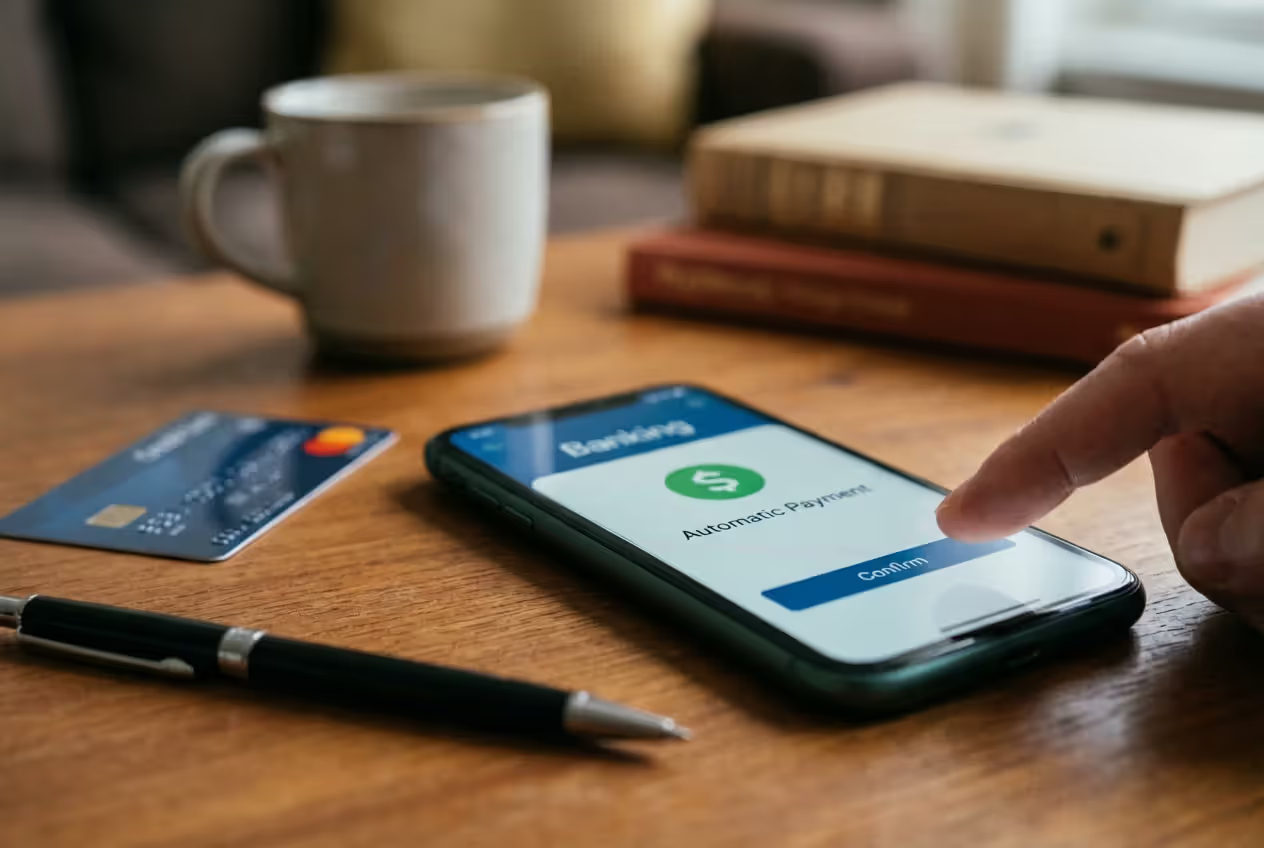
Set up automatic payments to eliminate the most common lapse trigger. Link your bank account or credit card to your insurance account and schedule recurring charges. Set the payment date 5-7 days before the actual due date to allow for processing time and potential bank delays. One person dodged a lapse only because their automatic payment processed three days early—their account would've been short on the actual due date.
Author: Matthew Redford;
Source: nayiyojna.com
Create calendar alerts as backup confirmation. Set reminders 15 days before each due date and again 3 days before. That first alert gives you time to fix problems (expired card, low funds). The second confirms payment went through. For annual policies, set a 60-day advance reminder to review coverage and confirm your contact information is current before renewal paperwork shows up.
Use financial hardship programs when money gets tight. Most insurers offer options that most customers never learn about: - Payment plans splitting annual premiums into monthly installments (usually adding 5-10% in fees, but stopping lapses) - Premium deferral during temporary unemployment or medical emergencies (30-90 days typically) - Coverage adjustments that cut premiums by raising deductibles from $500 to $1,000 (reducing premiums 15-20%) - Discount programs for bundling home and auto, adding anti-theft devices, or completing defensive driving courses
Call before you miss a payment. Once the lapse occurs, these programs get harder to access or become totally unavailable.
Keep current contact information to prevent administrative lapses. Update your address, phone, and email the moment they change. Opt into electronic billing and text notifications—you can't overlook an email like you overlook an envelope buried in junk mail. Review all insurer communications within 48 hours of getting them, even when you assume your account is fine.
Run annual policy reviews to catch problems early. Once each year, confirm: your coverage amounts still make sense, your payment method is still valid (cards expire, banks close accounts), and your contact information on file is accurate. Takes 15 minutes and prevents lapses costing thousands.
Add a backup payment method to your account. If your primary card gets declined, the secondary method processes automatically, stopping a lapse you wouldn't discover until the cancellation notice arrives.
Expert View on Maintaining Coverage
Letting coverage lapse ranks among the costliest consumer mistakes in insurance. Sure, you face immediate risk exposure, but the real damage comes from premium increases lasting years. Our research shows auto insurance customers pay an average of $5,000 extra over three years following a lapse—and that's after accounting for the clean record they're rebuilding. Insurers use predictive models treating coverage gaps as powerful signals of future claims. Once their algorithms code you as high-risk, you need 3-5 years of perfect payment history to work back to preferred rates
— Robert Hunter
Frequently Asked Questions
A lapsed insurance policy creates problems that echo for years—higher premiums, restricted coverage options, legal penalties, and personal liability for claims. What starts as a missed payment becomes a $5,000+ expense spread across 3-5 years of increased insurance costs. Add legal penalties for mandatory coverage types, and total damage easily tops $10,000.
Prevention beats cleanup by a massive margin. Automatic payments eliminate 80% of lapses. Keeping current contact information stops another 15%. That remaining 5%? Handle it by actually opening mail from your insurer and responding to payment issues before the grace period runs out.
When a lapse happens, you've got roughly 30 days to fix it with minimal damage. Call your insurer that day. Pay what you owe immediately. Set up automatic payments before hanging up. Wait 60 or 90 days? You're shopping for coverage in a market that doesn't want you, paying premiums that'll hurt for years.
Your insurance record works like your credit score—damage it, and you'll overpay on everything until enough time passes to rebuild it. Maintain continuous coverage, automate the payment process, and treat insurance billing like your mortgage payment. That's essentially what it is: a mandatory cost of owning property, driving vehicles, and protecting your family's financial security.