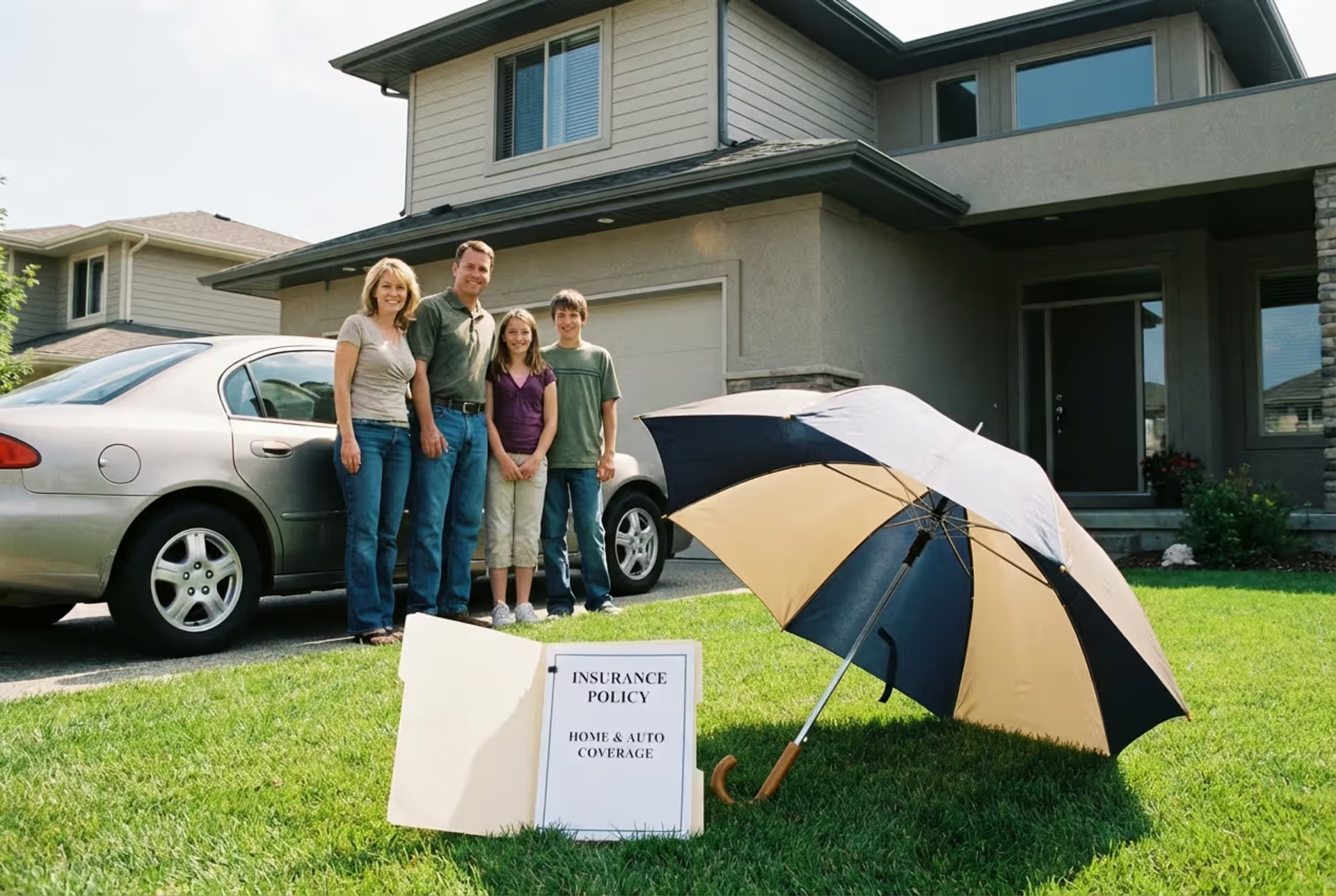
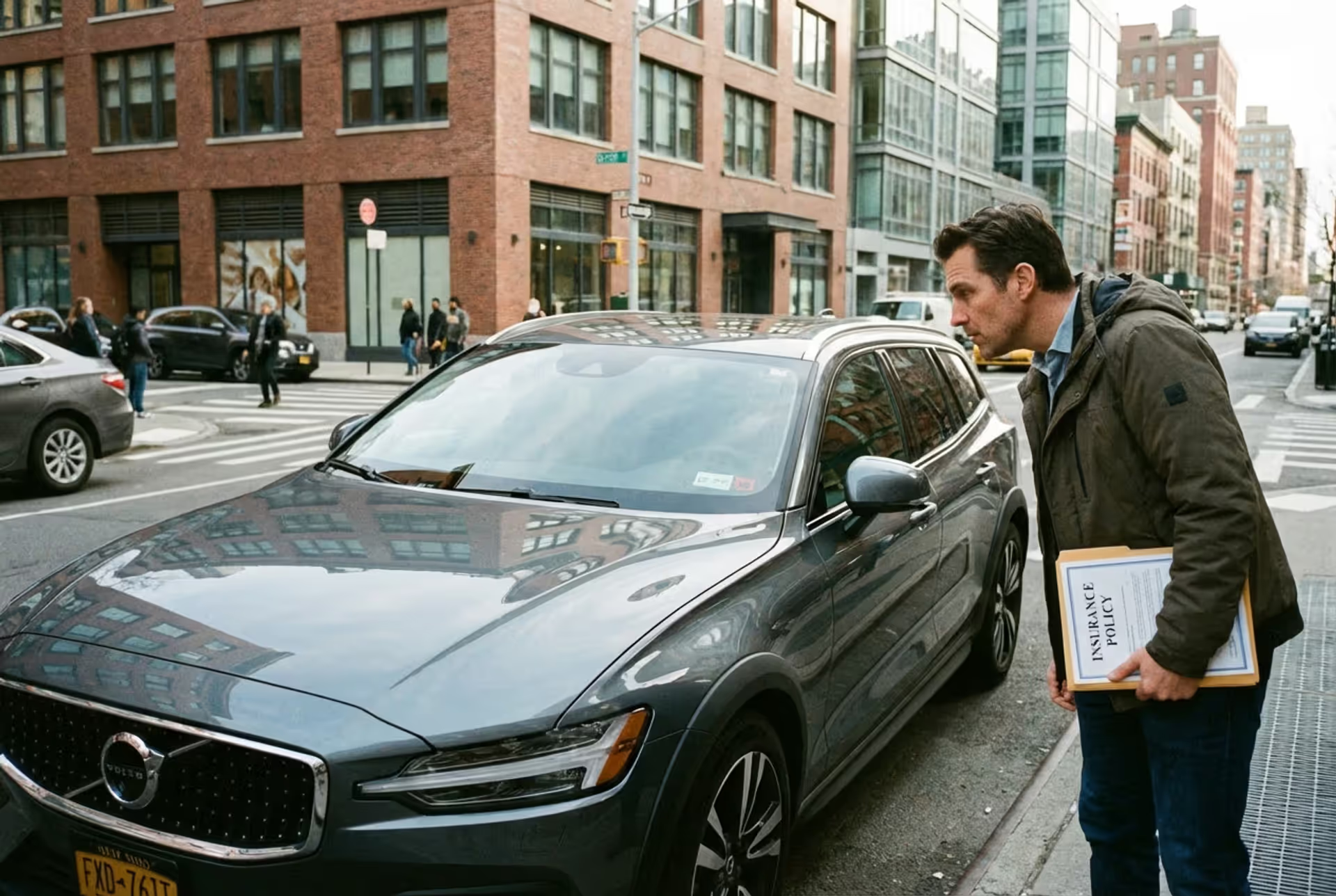
Driver standing near a car and reviewing an auto insurance policy
What Does Insurance Full Coverage Mean and Include

Content
Most car owners think "full coverage" insurance protects them against everything that could possibly go wrong with their vehicle. Reality? You're in for a shock when you file certain claims.
Here's the thing: insurance companies don't sell a product called "full coverage." Never have. The term is industry slang—a nickname drivers use for bundling several types of protection together. Your policy covers specific situations spelled out in the contract, and plenty of scenarios fall through the cracks.
Figuring out what's actually included saves you from nasty financial surprises down the road. Maybe you're making payments on a $32,000 truck. Or maybe you bought a 2015 Honda Civic with cash. Either way, understanding these coverage details determines whether you're spending money wisely or throwing cash at protection you'll never use.
What Full Coverage Insurance Actually Covers
In plain English, what full coverage insurance means is combining three separate protections: liability, collision, and comprehensive. Each one handles different problems.
Liability insurance covers the damage you inflict on other people and their stuff. Say you run a red light and T-bone another car—liability pays the other driver's hospital bills, lost paychecks, attorney fees if they sue you, plus repairs to their vehicle. It also covers property you damage: mailboxes, storefronts, road signs, whatever. New Hampshire is the only state that doesn't force drivers to carry this coverage, though most other states set pathetically low minimums like $25,000 per person injured. One serious crash blows right through those limits.
Collision coverage fixes your car after you smash into something—another vehicle, a concrete barrier, a tree, doesn't matter. Who caused the accident? Doesn't matter either. Rear-end someone while texting? Collision pays for your repairs minus whatever deductible you picked. Spin out on an icy bridge and hit the guardrail? Same deal. This coverage sticks with your vehicle, so it applies when your spouse drives, your college kid borrows it, or you loan it to your neighbor.
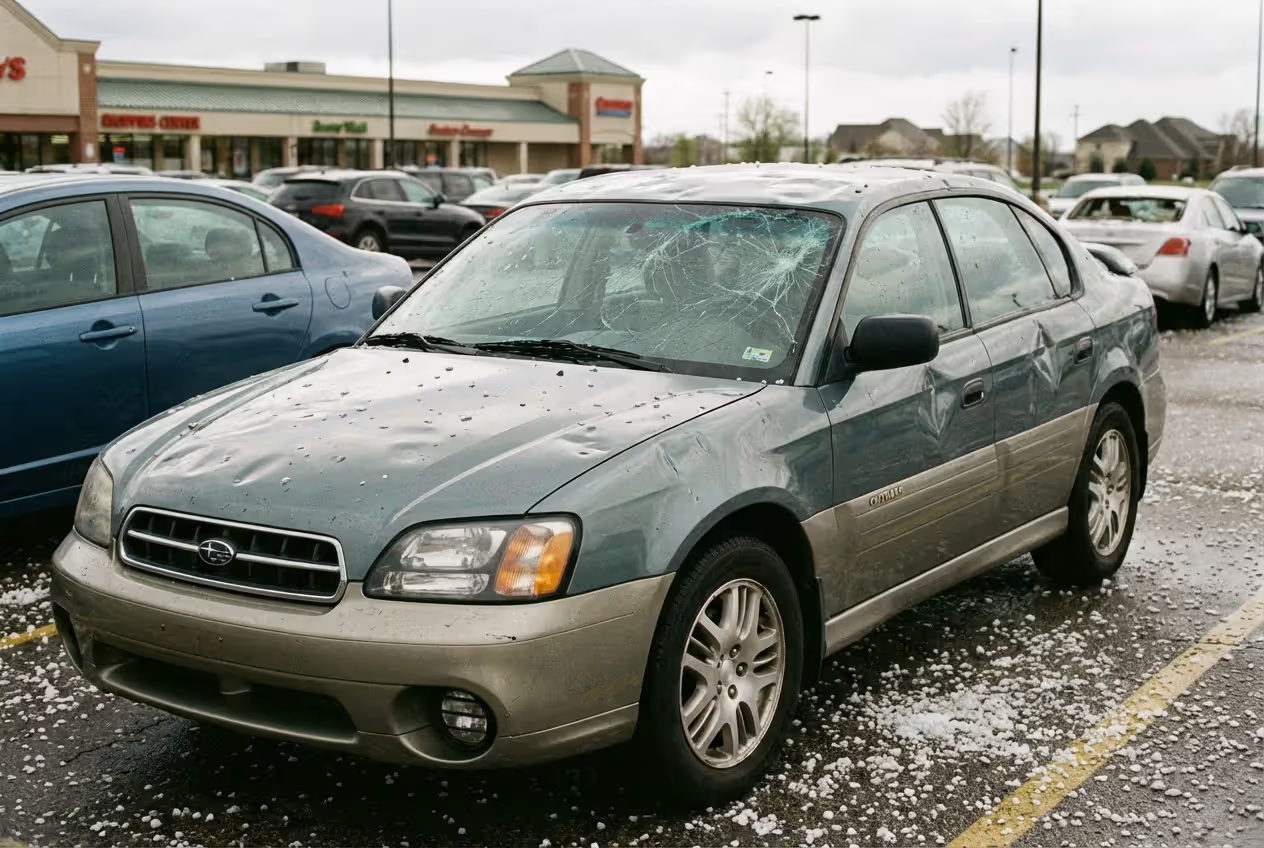
Comprehensive coverage steps in for everything else that can wreck your car without involving a collision. Someone steals your car from the mall parking lot—that's comprehensive. Hail pummels your windshield and dents your hood—comprehensive. A deer leaps into your path on a country road—believe it or not, comprehensive (even though you technically hit the deer). Vandals key your paint job, floods soak your interior, or a tree limb crashes down during a storm—all comprehensive claims.
Author: Hannah Kingsley;
Source: nayiyojna.com
What full coverage includes beyond these three depends on your state's rules. Some states require uninsured motorist protection, which reimburses you when someone without insurance crashes into you. No-fault states might mandate personal injury protection (PIP) to cover your medical bills regardless of who screwed up. These get bundled into policies alongside the big three.
This combination shields you from most common disasters. But calling it "full" coverage? That's where drivers get themselves into trouble.
Calling it 'full coverage' creates false expectations—no auto policy protects against every possible loss. What most people mean when they say this is a package combining liability, collision, and comprehensive protection. But you won't get reimbursed for engine failure, aftermarket stereo systems, or a brand-new replacement vehicle
— Robert Hunter
What Full Coverage Does Not Include
The limits of full coverage insurance smack you in the face when you try filing certain claims and the insurer says no.
Mechanical breakdowns are your problem, not your insurance company's. Transmission dies at 87,000 miles? Engine starts burning oil? Alternator quits charging? None of that's covered—not by collision, not by comprehensive, not by anything in a standard auto policy. Insurance responds to sudden accidents and external events, not parts wearing out or manufacturing defects. Extended warranties handle mechanical issues; car insurance doesn't.
Personal belongings stolen from your vehicle fall under homeowners or renters insurance instead of auto coverage. Thieves break your window and grab your laptop, golf clubs, and gym bag? Comprehensive pays to replace the broken glass. Your electronics and sporting equipment? That's a home insurance claim with your home insurance deductible. Drivers constantly get this wrong.
Aftermarket equipment and modifications typically cap out around $1,000 to $1,500 in standard policies. Installed a $4,500 custom sound system with amplifiers and subwoofers? Added $2,800 worth of off-road lights and a lift kit? Standard coverage won't come close to replacing these if your vehicle gets totaled or stolen. You need custom equipment endorsements specifically listing and insuring modifications.
Rental reimbursement requires buying separate coverage—usually $25 to $45 yearly. Your car sits in the body shop for three weeks after an accident. Who pays for your rental? Not collision or comprehensive. They fix your car, period. Without rental coverage, you're dropping $50 to $75 daily from your own wallet for transportation during repairs.
Gap insurance covers the painful difference between your car's actual value and what you still owe the bank. Vehicles lose roughly 20% of their value in year one. Total your financed car that's worth $23,000 when you owe $29,500? Standard full coverage cuts you a check for $23,000 minus your deductible. You're on the hook for the remaining $6,500 loan balance unless you bought gap protection separately.
Gradual deterioration doesn't qualify as a covered loss. Paint fading from sun exposure over five years? Rust spreading across your rocker panels? Slow oil seepage from a leaking gasket? Insurance policies respond to sudden, unexpected damage—not deterioration that happens over weeks, months, or years. These are maintenance issues.
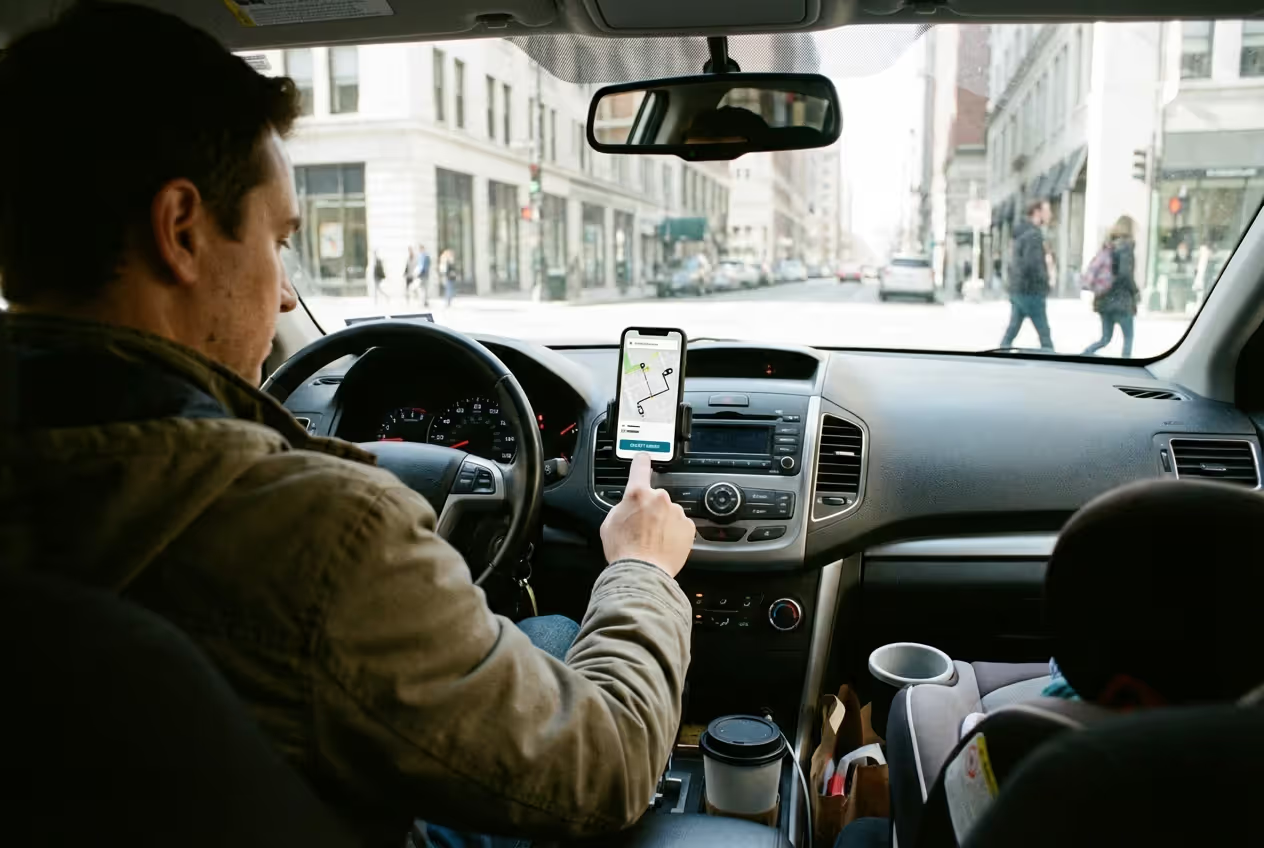
Commercial use voids personal auto policies. Drive for Uber, Lyft, or DoorDash? Your personal insurance—even "full coverage"—disappears the moment you turn on the app and start making money. Get into an accident while delivering someone's burrito, and your claim gets denied. Rideshare and delivery work require commercial coverage or specialized rideshare endorsements.
Author: Hannah Kingsley;
Source: nayiyojna.com
Full Coverage vs Liability Only Insurance
Choosing between these comes down to balancing financial protection against monthly costs. The split goes deeper than just price tags.
| Coverage Component | What Gets Protected | Annual Cost (Typical Range) | Makes Sense For | Lenders Demand It |
| Liability alone | Injuries and property damage you cause to others | $650–$1,150 | Vehicles over 10 years old, cars worth under $3,500, people with solid emergency savings | Nope |
| Full coverage package | Damage to your own vehicle (collision/comprehensive) plus harm you cause others (liability) | $1,900–$3,400 | Cars with loans or leases, newer vehicles, drivers without big savings cushions, valuable cars | Absolutely |
Liability-only policies satisfy your state's legal requirements and prevent lawsuits from wiping you out. Cause a pileup that sends three people to the ER with $180,000 in combined medical bills? Your liability coverage (assuming you bought sufficient limits) handles those claims. Your own smashed car? You're paying to fix or replace it entirely from your bank account.
Full coverage runs two to three times higher because insurers accept way more risk. They're not just protecting other people from your mistakes—they're writing checks for damage to your vehicle from countless scenarios. Michigan drivers might pay $2,750 yearly for full coverage versus $920 for liability-only on identical cars.
Vehicle value changes this math dramatically. Insuring a 2024 Honda Accord worth $29,000 with full coverage might run $2,100 annually. That same Accord from 2017 worth $11,000? Full coverage drops to maybe $1,500 while liability holds around $880. As cars age and lose value, collision and comprehensive premiums sink because the maximum payout shrinks with depreciation.
Your deductible selection swings premiums significantly. Jump from a $250 deductible to $1,000, and your premium might drop 35%. Of course, you'll fork over $750 more out-of-pocket whenever you file a claim. Some folks choose high deductibles on older cars—basically self-insuring small fender-benders while keeping protection against total losses.
How much financial risk can you stomach? Careful drivers with $15,000 sitting in savings might take the liability-only gamble on a paid-off vehicle. Others lose sleep without full protection, knowing a hailstorm or parking lot collision won't drain their emergency fund.
When Full Coverage Makes Sense for Your Situation
Certain situations make full coverage a practical necessity, not an optional expense.
Financed or leased vehicles require it—no exceptions. Your loan or lease contract demands full coverage because the bank owns your car until you've made that final payment. Lenders protect their collateral this way. Drop collision or comprehensive without telling them, and they'll slap forced-place insurance on your loan—typically three times more expensive—and bill you for every penny. You're contractually stuck maintaining full coverage until the title transfers to your name or you return the leased vehicle.
High vehicle value justifies the cost when replacement from savings would sting. Your car's worth $26,000 and you've got maybe $9,500 in emergency money? A total loss creates immediate financial pain. Full coverage transfers that risk to the insurance company for a predictable annual fee. Here's a useful guideline: keep full coverage when your vehicle's value exceeds ten times the annual premium gap between full and liability-only policies.
Limited savings make full coverage essential for financial survival. Drivers living close to the edge or carrying minimal emergency funds can't absorb a $16,000 hit from a totaled car. Paying $165 monthly for full coverage provides certainty that a single accident won't financially ruin you or eliminate your transportation to work. Losing your vehicle equals losing your income for many Americans.
High-risk locations increase the odds you'll file comprehensive claims. Live where car theft is rampant? Where hail storms pummel vehicles every spring? Where deer collisions happen weekly? Comprehensive coverage pays for itself in these environments. Urban neighborhoods with high vandalism rates or flood-prone areas make this coverage more valuable. Your ZIP code dramatically affects both your risk profile and your premium.
Personal comfort level and driving habits matter tremendously. Drive 32,000 miles yearly through congested rush-hour traffic? Your accident risk dwarfs someone driving 7,500 miles in rural areas. Long commutes, teenage drivers in your household, or a spotty driving history make full coverage more appealing. Some people simply can't relax without comprehensive protection, and that peace of mind has value.
Small premium gaps on moderately-valued vehicles tip the scales toward keeping coverage. Say your 2021 vehicle's full coverage costs $1,650 versus $850 for liability alone—an $800 annual difference. Car's worth $19,000? You're spending 4.2% of its value for collision and comprehensive protection. Reasonable math. Fast-forward to 2029 when that vehicle's worth $9,000 and full coverage only drops to $1,250. Now you're paying $400 more for collision/comprehensive on a $9,000 car—still 4.4% of value. The absolute dollar gap narrowed, making full coverage easier to justify relative to your risk exposure.

Author: Hannah Kingsley;
Source: nayiyojna.com
When You Can Drop Full Coverage
Knowing when full coverage makes sense also means recognizing when it becomes financial waste.
Older vehicles with minimal market value rarely justify the expense. Your car's worth $3,800 and full coverage runs $1,350 yearly with a $500 deductible? A total loss pays just $3,300 after your deductible. You spent $1,350 to insure $3,300 of value—terrible math. Three years of premiums nearly equals the car's total worth.
The 10% guideline provides a practical decision framework: when your annual collision and comprehensive premiums exceed 10% of your vehicle's actual cash value, strongly consider dropping to liability only. Calculate just the premium difference (full coverage minus liability only), not your entire premium. A $4,200 car with a $750 premium gap means you're spending 17.9% of the vehicle's value annually for physical damage coverage. That's economically absurd.
Strong emergency reserves eliminate the need to transfer risk to insurers. You've accumulated $18,000 in readily available savings and your car's worth $8,500? You can self-insure this risk. Losing the vehicle would annoy you but wouldn't create financial catastrophe. You'd pocket the premium savings year after year, essentially building your own insurance fund that earns interest.
Paid-off vehicles remove lender requirements and restore your choice. Once you've mailed that final payment, evaluate whether coverage still makes financial sense based on current value, your savings position, and risk comfort level. Tons of drivers blindly continue full coverage without reassessing their changed circumstances.
Annual cost-benefit analysis should be standard practice. Check your car's current value on Kelley Blue Book or Edmunds. Compare full coverage premiums to liability-only quotes. Paying $550 more yearly for collision and comprehensive on a car worth $5,500? You break even in ten years if you never file a claim—absurd given typical vehicle lifespans and accident frequency. But paying $380 more on a $13,000 vehicle when you have minimal savings? Maintaining coverage probably makes sense.
Risk appetite and financial circumstances vary wildly between individuals. Retirees with $400,000 in investment accounts might comfortably self-insure a $12,000 vehicle. Young families stretching to cover rent and childcare might need full coverage on that exact car because replacing it would derail their budget. No universal threshold exists—your complete financial picture drives this decision.
How to Customize Your Full Coverage Policy
Full coverage isn't standardized or fixed. Multiple adjustments optimize protection for your specific situation and budget.
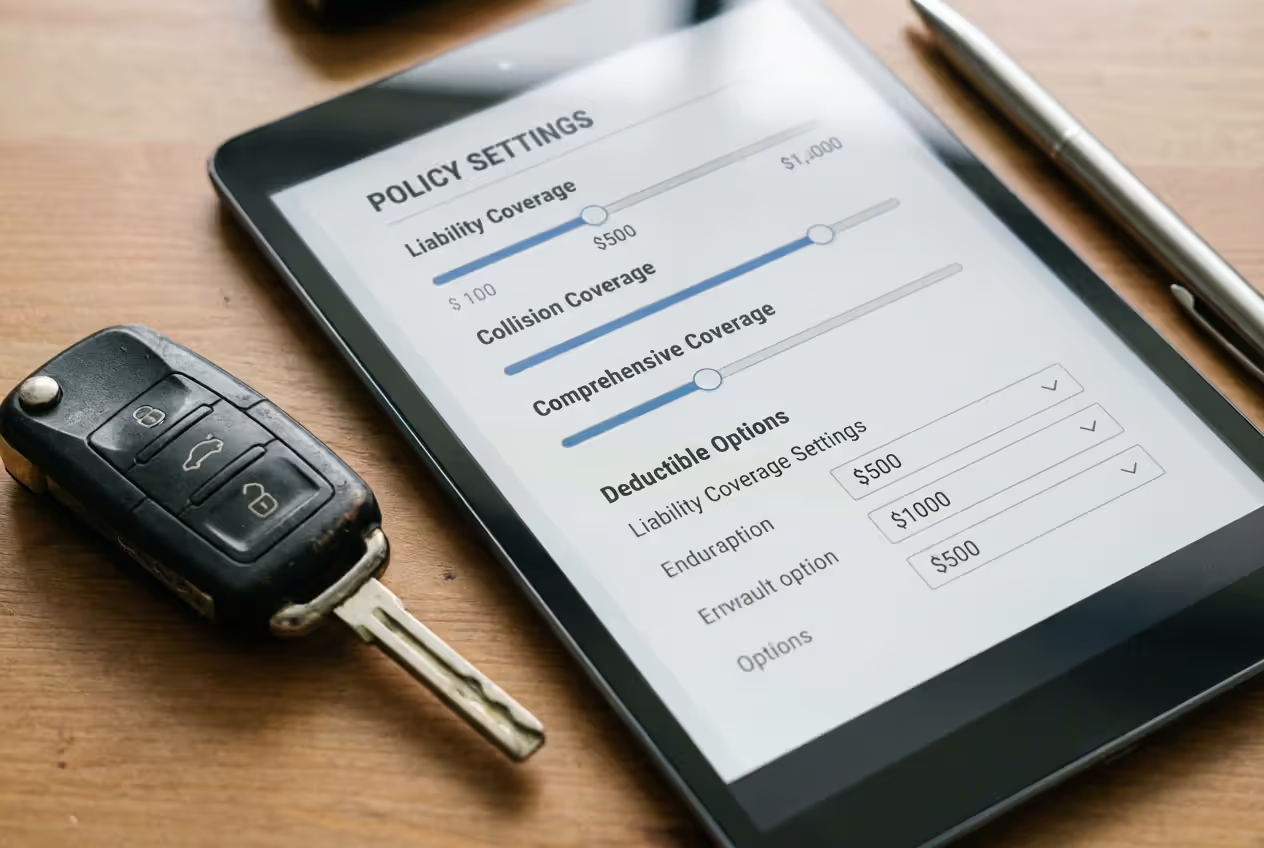
Deductible choices directly control premiums and out-of-pocket exposure. Standard deductibles span $250 to $2,000. Jumping from $500 to $1,000 typically saves 25% to 30% on collision and comprehensive premiums. Higher deductibles work great when you maintain emergency savings and prefer lower ongoing costs. Lower deductibles benefit drivers who want minimal surprise expenses after accidents.
Think about splitting your deductibles for collision versus comprehensive. Comprehensive claims—theft, weather damage, animal strikes—happen without warning or fault. Collision incidents sometimes involve driver error or judgment. You might pick a $500 comprehensive deductible for unexpected events but a $1,000 collision deductible to trim premiums, accepting more personal responsibility for at-fault accidents.
Liability limits beyond state minimums provide critical lawsuit protection. State minimums like $25,000 per injured person/$50,000 per accident/$25,000 property damage are laughably inadequate. One serious crash with multiple injuries easily hits $150,000 in medical costs. Bumping to $100,000/$300,000/$100,000 or $250,000/$500,000/$250,000 costs maybe $18 to $35 extra monthly but shields your assets from devastating lawsuits. Umbrella policies layer $1 million or more additional liability coverage for roughly $225 to $450 annually.
Rental car reimbursement costs $22 to $55 yearly and pays $35 to $55 daily for rental vehicles while yours undergoes repairs after a covered loss. Skip this endorsement and you're paying $45 to $80 daily from your wallet—potentially $630 to $1,120 over a two-week repair. High value relative to cost.
Roadside assistance through your insurer runs $12 to $28 yearly, covering towing, jump-starts, flat tire changes, lockout help, and emergency fuel delivery. This duplicates AAA-type memberships but integrates directly with your policy, sometimes offering superior towing distance limits (150+ miles versus AAA's typical 100-mile max). Compare features and costs against standalone roadside programs.
Loan/lease gap protection costs $18 to $45 annually through your auto insurer versus $500 to $800 when financed through dealerships. This erases the painful gap between your totaled vehicle's actual cash value and your remaining loan balance. Critical for new car buyers with small down payments; becomes unnecessary once your loan balance dips below your car's depreciated value.
Uninsured/underinsured motorist coverage shields you when at-fault drivers lack sufficient insurance. Some states mandate it; others make it optional. Roughly 13% of American drivers carry no insurance (considerably higher in states like Mississippi, Michigan, and Tennessee), making this coverage valuable. Carry it at limits matching your liability coverage. It reimburses your medical expenses and vehicle damage when someone without adequate coverage crashes into you.
OEM parts endorsements guarantee repairs use factory original parts rather than aftermarket substitutes. Matters significantly for newer vehicles where resale value and manufacturer warranty coverage depend on genuine factory components. This endorsement typically adds 7% to 12% to premiums but preserves your vehicle's integrity and market value.
Author: Hannah Kingsley;
Source: nayiyojna.com
Frequently Asked Questions About Full Coverage Insurance
Full coverage car insurance delivers valuable protection by bundling liability, collision, and comprehensive coverage, but don't let the name fool you—it's not the impenetrable shield many drivers imagine. Understanding precisely what these policies cover and their significant gaps prevents financial shocks and helps you make informed choices about vehicle protection.
Choosing between full coverage and liability-only depends on vehicle value, financial reserves, lender requirements, and personal risk tolerance. Newer or financed cars typically warrant full coverage; older vehicles with minimal market value often don't justify the cost. Customizing your policy with smart deductible choices, adequate liability limits, and targeted endorsements creates protection matching your needs without wasting money on unnecessary coverage.
Review your coverage yearly as vehicles age and financial situations evolve. What made perfect sense driving off the dealership lot might waste money five years later. Conversely, maintaining robust protection on a moderately valued vehicle you depend on daily might be worth every dollar even without lender requirements. The right answer depends entirely on your circumstances—not some universal definition of "full coverage.