

Woman at kitchen table reviewing bills, payment reminders, and debt documents
What Is a Consolidation Loan and How Does It Work

Content
Last Tuesday, Jessica sat at her kitchen table surrounded by seventeen different envelopes. Credit card statements, mostly. Three payment apps on her phone kept pinging reminders. Her Capital One bill? Already six days late. The personal loan from when she consolidated her debt three years ago (yes, the irony wasn't lost on her) came due on Wednesdays. Or Thursdays. Honestly, she'd stopped tracking.
She'd paid $247 in late fees over the past ninety days alone.
A consolidation loan can transform this financial juggling act into something you can actually manage—one payment, one due date, ideally at a lower interest rate. But before you start filling out applications, understand this: consolidation fixes the symptom, not the disease. Use it wrong and you'll end up worse off than when you started.
Consolidation Loan Meaning and Definition
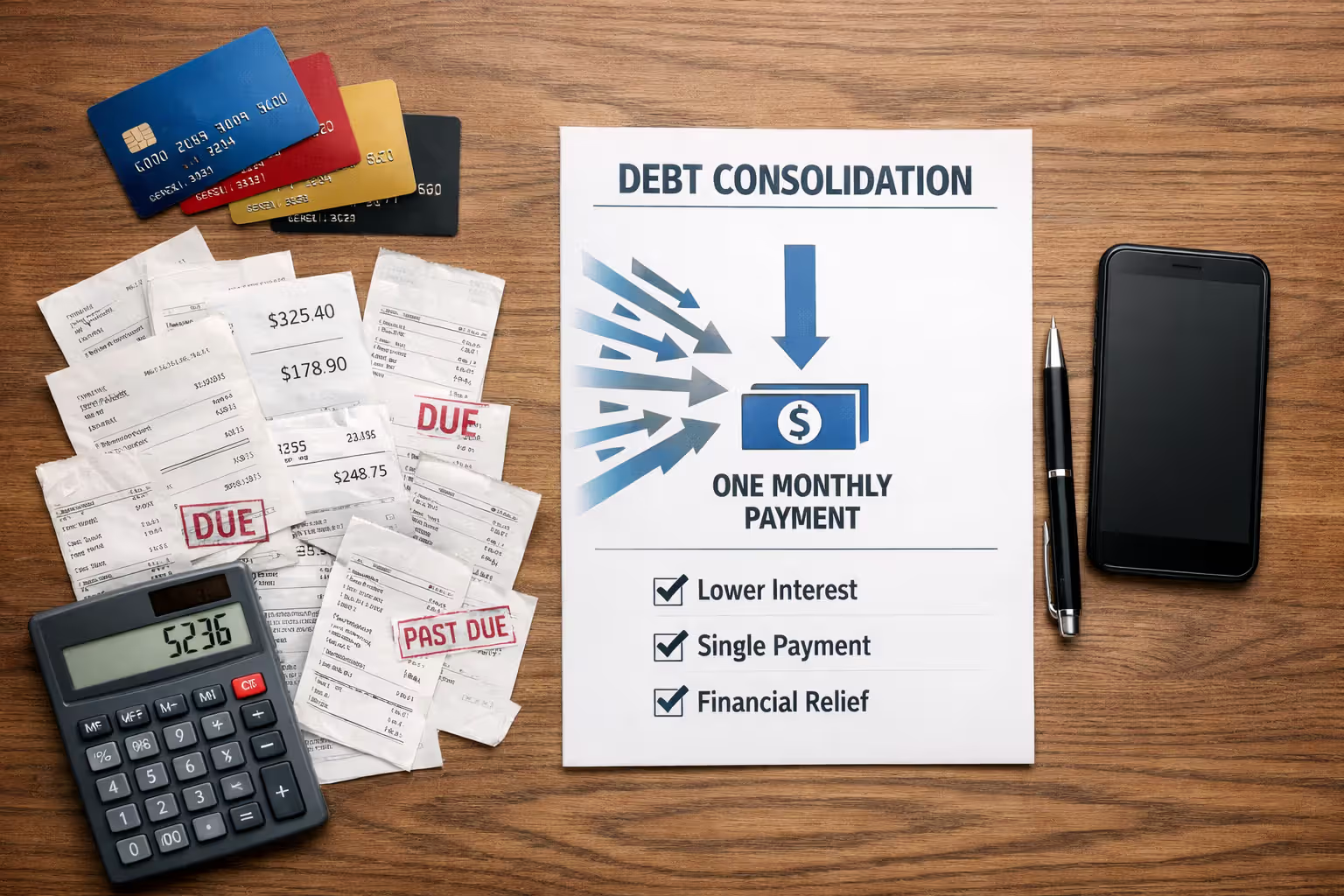
Think of your debts like browser tabs you've left open for months. Each one drains resources. Each one demands attention. A consolidation loan meaning boils down to this: you borrow enough money to close all those tabs at once, leaving yourself with just one window to manage.
Author: Matthew Redford;
Source: nayiyojna.com
Debt consolidation explained in practical terms: you're carrying $23,000 spread across various places—$9,500 on three different Visa cards, $6,000 from that Marcus personal loan, $4,200 in medical bills from your emergency appendectomy, $2,100 on a Best Buy card, and $1,200 you borrowed from your brother-in-law (which carries its own kind of interest in awkward Thanksgiving dinners). You get approved for a $23,000 consolidation loan. Depending on your lender, that money either gets wired straight to each creditor, or it hits your checking account with instructions to settle everything yourself.
Either way, you've traded multiple financial relationships for a single one.
What types of debt actually qualify? More than you'd expect:
- Credit card balances running at 19-29% APR
- Existing personal loans from banks, credit unions, or online lenders
- Medical bills that creditors will accept immediate payment on
- Payday loans and title loans slowly strangling your budget
- Private student loans (federal student loans have separate consolidation programs through the Department of Education)
- Store credit accounts you opened for a discount and forgot about
Your mortgage doesn't belong in this category. Neither does your auto loan. These secured debts—backed by physical property—operate under completely different rules. Yes, home equity products can technically pay them off, but that's a different conversation entirely.
How Consolidation Loans Work
Understanding how consolidation loans work means following two distinct phases: first, convincing a financial institution you're worth the risk, then managing the repayment schedule they give you.
The Application and Approval Process
Banks aren't making decisions based on gut feelings. They're pulling your credit score—expect a hard inquiry that temporarily dings you 3-5 points. They're reviewing your full credit report hunting for bankruptcies, active collections, or patterns that scream "this person can't manage money." They want verification of steady income: recent pay stubs, W-2s, or tax returns for self-employed applicants. Job stability counts; switching employers every four months raises red flags.
The real killer? Your debt-to-income ratio calculation. Here's how it works: add up everything you pay toward debt monthly—credit cards, car loans, student loans, the works. Let's say that totals $3,100. Your gross monthly income (before taxes) is $6,500. Divide $3,100 by $6,500 and you get 47.7%. Most lenders draw the line around 43%, though exceptional credit sometimes buys you flexibility up to 50%.
You'll request a specific loan amount covering exactly what you need to eliminate existing obligations. Better lenders send funds directly to your creditors, which honestly protects you from the temptation to "just use a little" for something else. Others deposit everything into your account, trusting you to follow through.
Your interest rate depends almost entirely on your credit profile. Someone with a 760 score might land something in the 7-9% range. Drop down to 630 and you're looking at 22-26% if you even get approved. Unlike credit cards where your rate can jump whenever the bank's quarterly earnings look soft, consolidation loans lock your rate from day one through final payoff.

Author: Matthew Redford;
Source: nayiyojna.com
How Payments Are Structured
You'll get an amortization schedule showing your exact monthly payment, total loan duration, and what you'll ultimately spend on interest charges. Most terms run two to seven years, though some lenders stretch to twelve for larger amounts.
Each monthly payment gets divided between principal (the actual money you borrowed) and interest (the cost of borrowing). Early in the loan, most of your payment covers interest—the bank gets their money first. Halfway through, the split becomes more balanced. By year five of a seven-year loan, most of your payment finally attacks the principal balance. This structure explains why making extra payments early saves dramatically more money than extra payments near the end (assuming your lender doesn't charge prepayment penalties, which absolutely isn't universal).
I only recommend consolidation when someone qualifies for a rate at least four percentage points below their current average, and they've genuinely addressed whatever spending patterns created the mess initially. Skip that second requirement and you're headed straight toward carrying both the consolidation loan payment and fresh credit card debt within eight months
— Rebecca Thornton
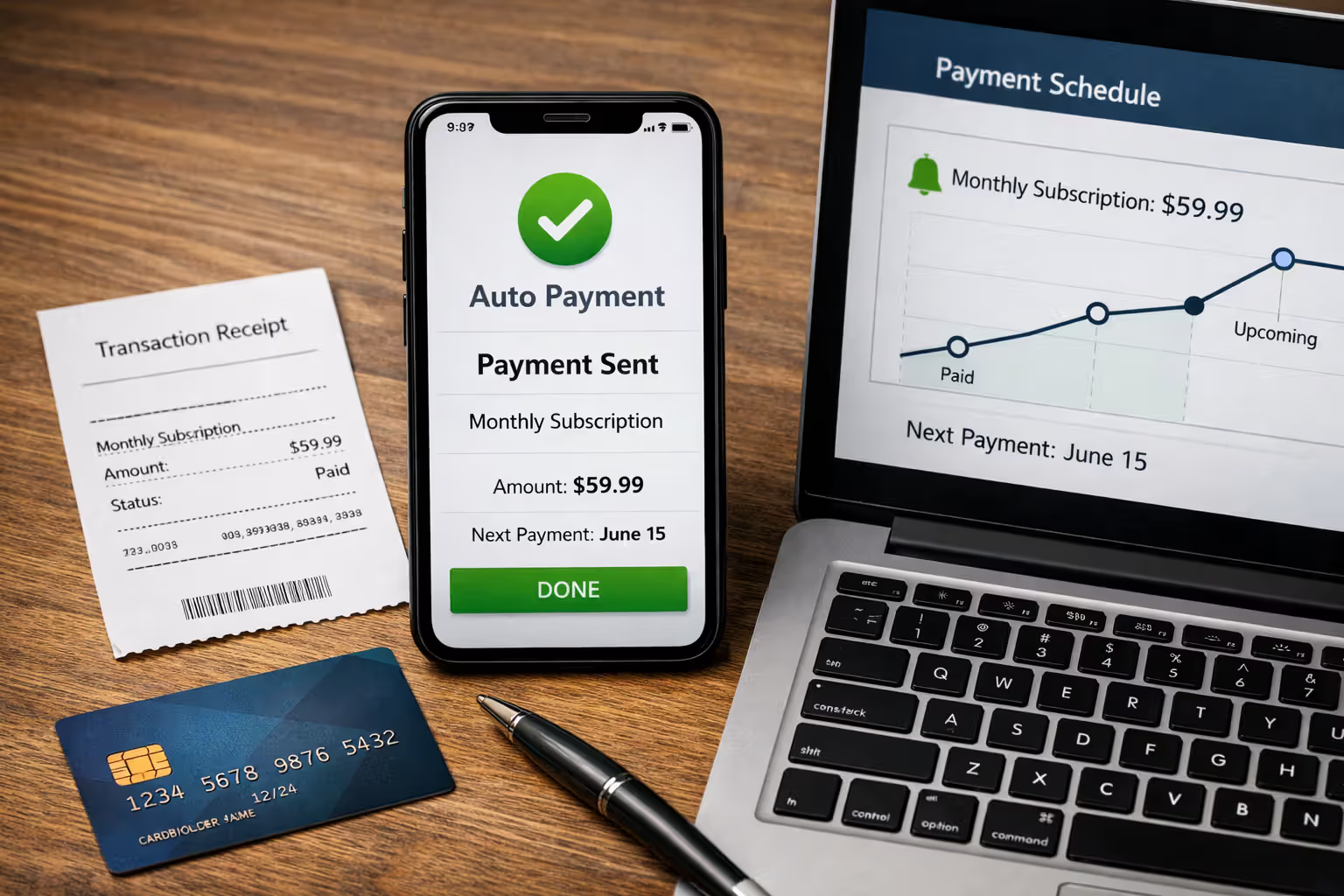
Your first payment typically comes due 30-45 days after funding. Enroll in automatic payments from your checking account—it eliminates the "I forgot" excuse and some lenders shave 0.25% off your rate as a reward.
Types of Consolidation Loans Available
Several financial products can consolidate debt. Each operates under different rules and fits specific situations better than others.
Personal consolidation loans come from traditional banks, credit unions, or online platforms like SoFi, LendingClub, or Upstart. They're unsecured, meaning no collateral required—approval depends entirely on your creditworthiness and income verification. You can typically borrow $1,000 to $50,000, though a few lenders go higher. Both your rate and terms stay locked for the entire repayment period. Credit unions frequently beat banks on pricing, especially for borrowers with average rather than excellent credit.
Author: Matthew Redford;
Source: nayiyojna.com
Balance transfer credit cards take a different approach. You're moving existing credit card balances onto a new card offering 0% promotional interest for 12-21 months. This works beautifully when you can obliterate the balance before that promotional window slams shut. Watch out for balance transfer fees, though—typically 3-5% of whatever you're moving. Still carrying a balance when the promo period expires? You're now paying the card's regular rate, often 20-25% or higher.
Home equity loans and HELOCs leverage your home's value. A home equity loan delivers one lump sum at a fixed rate—you know exactly what you're getting upfront. HELOCs work more like credit cards—you draw money as needed during a specific draw period, usually at variable rates that fluctuate with the market. Both typically offer lower rates than unsecured options because your house backs the loan. That's also the nightmare: stop paying and foreclosure becomes frighteningly real.
Federal student loan consolidation applies exclusively to federal loans. It won't lower your interest rate—the government calculates a weighted average of your existing rates, then rounds up to the nearest eighth of a percent. The real benefit comes from simplified payments and unlocking income-driven repayment plans or loan forgiveness programs. Got private student loans? Those don't qualify for federal consolidation at all.
401(k) loans let you borrow from your own retirement account, usually capped at 50% of your vested balance or $50,000, whichever comes first. You're technically paying yourself back with interest, which sounds great until reality intrudes: leave your employer voluntarily or otherwise, and the entire balance usually comes due within 60-90 days. Miss that deadline? The IRS treats it as taxable income, plus a 10% early withdrawal penalty if you're under 59½.
When to Use a Consolidation Loan
Figuring out when to use a consolidation loan requires brutal honesty about your situation, not wishful thinking about easier payments.
Your existing debts carry interest rates that make you physically ill. Three credit cards averaging 24% APR, and you qualify for consolidation at 9%? That's meaningful improvement saving real money month after month. Calculate your current total monthly interest charges across all debts, then compare that against consolidation offers. If the savings amount to less than three percentage points, you're probably spinning your wheels.
You're bleeding late fees because tracking six different due dates exceeds your organizational skills. One creditor wants payment on the 5th, another on the 19th, a third on the 27th. Before you know it, you've missed two payments this month alone and you're down $80 in penalties. Consolidating creates a single due date, eliminating that chaos entirely.
Your credit score determines whether consolidation actually helps or hurts. Above 670, you'll unlock genuinely competitive rates that deliver measurable savings. Scores between 620-669 might get you approved, but rates could barely improve on what you're currently paying. Below 620? Forget consolidation—rates will be punishing if you qualify at all.
Your debt-to-income ratio can kill applications faster than bad credit. Monthly debt payments consuming 40% or more of your gross monthly income? Lenders see flashing red warning lights. They'll often reject you outright or quote rates so absurd you'd be better off with a loan shark. Sometimes you need to boost income or slash expenses before consolidation becomes feasible.
Here's the part that stings: consolidation fails spectacularly when you haven't addressed whatever behavior created the debt initially. Consolidate today while continuing to overspend tomorrow? You'll carry both the consolidation loan payment and fresh credit card balances within six months. That's objectively worse than your starting position. Some people close paid-off credit cards immediately after consolidating specifically to eliminate temptation, even though doing so temporarily damages credit scores by reducing available credit.
Skip consolidation entirely if you're nearly debt-free already. Three months from paying everything off? Just finish the sprint. Similarly, if your existing debts already carry low rates—say, under 8%—consolidation probably won't save enough to justify application fees and hassle.
Consolidation Loan Pros and Cons
Every financial tool involves trade-offs. Understanding consolidation loan pros and cons prevents expensive mistakes.
| Advantages | Disadvantages |
| One payment simplifies everything: Managing a single payment instead of seven reduces stress and the probability you'll accidentally miss something important | Total interest could increase: Stretching repayment from three years to seven years cuts monthly payments but can substantially increase total interest paid over the loan's life |
| Lower rates deliver real savings: Good credit can unlock rates half of what you're currently paying on high-interest credit cards | Upfront costs hurt: Origination fees typically run 1-8% of the loan amount; balance transfers charge 3-5%; home equity products involve closing costs potentially reaching thousands |
| Predictable schedule enables planning: Fixed payments and a definite payoff date make budgeting actually possible instead of guessing what you'll owe | Credit score takes an initial hit: Hard inquiries from applications temporarily lower your score; opening new accounts while closing old ones can reduce average account age |
| Credit utilization ratio improves: Paying off maxed credit cards dramatically helps your utilization calculation, often boosting your score within 3-6 months | Temptation destroys progress: Empty credit cards seduce some people into new spending, creating a disaster scenario with both consolidation payments and fresh debt |
| Monthly obligations shrink: Better rates or extended terms can free up several hundred dollars monthly for emergency funds or other financial priorities | Home equity options risk foreclosure: Using your house as collateral means you could literally lose your home if payments become impossible to maintain |
| Simpler creditor management: Dealing with one lender instead of coordinating with six different creditors becomes crucial if you hit financial trouble | Good credit becomes mandatory for beneficial rates: The people who need consolidation most desperately sometimes can't qualify, or only at rates that don't actually help |
Real scenario: Marcus owes $22,000 across five credit cards averaging 23% APR. His combined minimum payments total $680 monthly. Paying minimums? He's facing 18+ years to payoff with over $35,000 paid toward interest alone. He qualifies for consolidation at 10.5% with a five-year term. New payment drops to $473 monthly. Total interest shrinks to approximately $6,400. He's saving $207 per month and over $28,000 in interest charges—but only if he resists accumulating fresh credit card debt while repaying the consolidation loan.

Author: Matthew Redford;
Source: nayiyojna.com
Consolidation Loans vs Other Debt Relief Options
Consolidation isn't your only path when debt feels crushing. Other strategies exist, each carrying distinct advantages and serious drawbacks.
Debt management plans through nonprofit credit counseling agencies work differently. A counselor negotiates directly with your creditors pursuing reduced interest rates and waived fees. You send one monthly payment to the agency, which distributes funds among creditors following negotiated agreements. These plans usually last three to five years and require closing credit card accounts during participation. Unlike consolidation, you don't need strong credit or loan approval, but the plan appears on your credit report and certain creditors note your account as enrolled in counseling.
Debt settlement involves negotiating to pay substantially less than you actually owe—typically 40-60% of the original balance. Settlement firms usually instruct clients to completely stop payments while they negotiate, which obliterates your credit score and generates massive late fees. Plus, forgiven debt exceeding $600 often counts as taxable income on your next return. Settlement makes sense primarily when lawsuits loom imminent and you legitimately cannot pay the full amount through any other method.
Bankruptcy provides legal protection from creditors while eliminating or restructuring debts through the court system. Chapter 7 can eliminate most unsecured debt within three to four months, but you must pass a means test and your credit suffers severe damage for up to ten years. Chapter 13 establishes a three-to-five-year repayment plan for people with steady income who want to preserve assets like their home. Bankruptcy should be your absolute last resort after exhausting all alternatives, but it genuinely provides a fresh start when debt has become completely unmanageable.
DIY payoff strategies like the avalanche method (minimum payments everywhere except your highest-interest debt) or snowball technique (targeting your smallest balance first for psychological momentum) cost nothing and avoid credit inquiries. These approaches work wonderfully for disciplined people with manageable debt loads, but you need consistent extra payments to make meaningful progress.
Consolidation loans occupy middle ground in the debt relief spectrum. They provide structure and potential interest savings without the credit destruction accompanying settlement or bankruptcy, but they require qualification that excludes people with severely damaged credit or crushing debt-to-income ratios.

Author: Matthew Redford;
Source: nayiyojna.com
Common Questions About Consolidation Loans
Consolidation loans work brilliantly for the right person in the right circumstances. When you qualify for rates substantially below what you're currently paying, when you've honestly identified and addressed the spending patterns that created your debt, and when you're genuinely committed to avoiding new debt during repayment, consolidation can save thousands in interest while dramatically reducing financial stress.
This decision demands brutal honesty with yourself. Calculate what you're actually paying across all current debts, compare that to available consolidation rates, and project total interest costs under both scenarios. Ask yourself whether you possess the discipline to leave credit cards alone once they're paid off. Evaluate your job stability and income reliability—these loans require consistent payments for years.
If you don't qualify for favorable consolidation rates, alternatives like debt management plans or targeted payoff strategies might actually deliver better results. The goal isn't consolidation for consolidation's sake—it's finding a sustainable path to debt freedom while maintaining or improving your overall financial health.
Before committing to any consolidation loan, read every single word of the loan agreement, understand all fees involved, verify there aren't prepayment penalties buried somewhere in section 7, paragraph 4, and check the lender's reputation through independent reviews and Better Business Bureau ratings. The right consolidation loan should feel like genuine relief, not just another source of anxiety keeping you awake at night.