
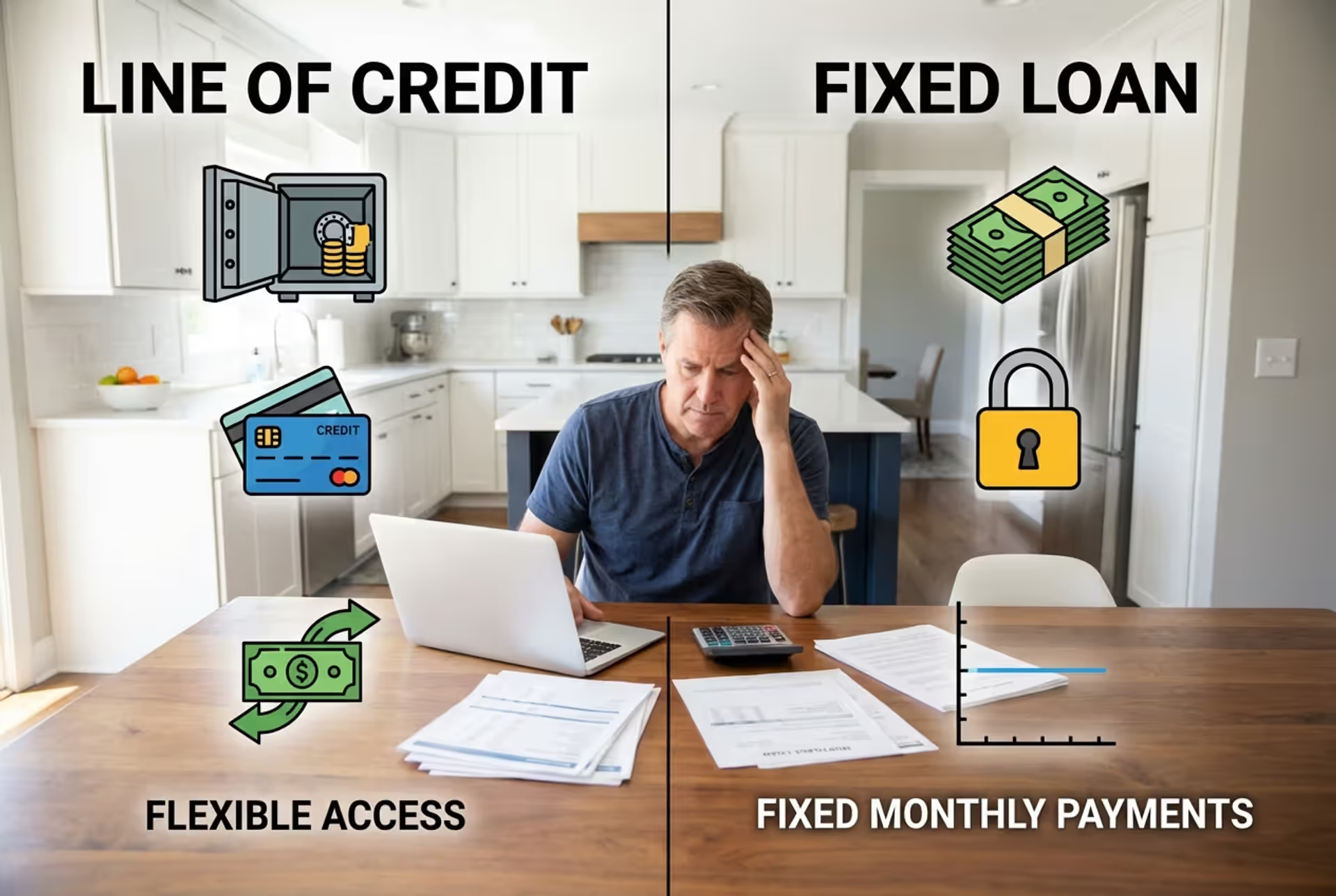
Homeowner comparing HELOC and home equity loan options at a kitchen table
HELOC vs Home Equity Loan Guide

Content
Most homeowners wrestle with a simple question: should I tap my equity through a line of credit or grab it all upfront with a traditional loan? Here's the truth—neither choice is universally "better." What matters is how you'll actually use the money, whether you can sleep at night with a variable rate, and if you're the type who needs a fixed payment staring back from your budget spreadsheet every month.
What Is a HELOC and How Does It Work?
Think of a HELOC as a credit card where your house picks up the tab. Lenders hand you access to a pool of money—say, $75,000—and you pull from it when you need it. Need $12,000 for new windows in March? Withdraw it. Another $8,000 for HVAC repairs in July? Take that too. You're only paying interest on what you've actually borrowed, not the full amount sitting there available.
The whole setup runs in two chapters. First comes the draw period, which usually lasts about 10 years. During this window, you can borrow, pay back, and borrow again—like filling and emptying a bucket. Most banks only require interest payments during these years, though nothing stops you from paying down the actual borrowed amount if you've got extra cash lying around. Smart borrowers do exactly that.
Then the music stops. The repayment period kicks in—typically another 10 to 20 years—and suddenly you can't borrow anymore. Now you're paying both interest and principal every month until the balance hits zero.
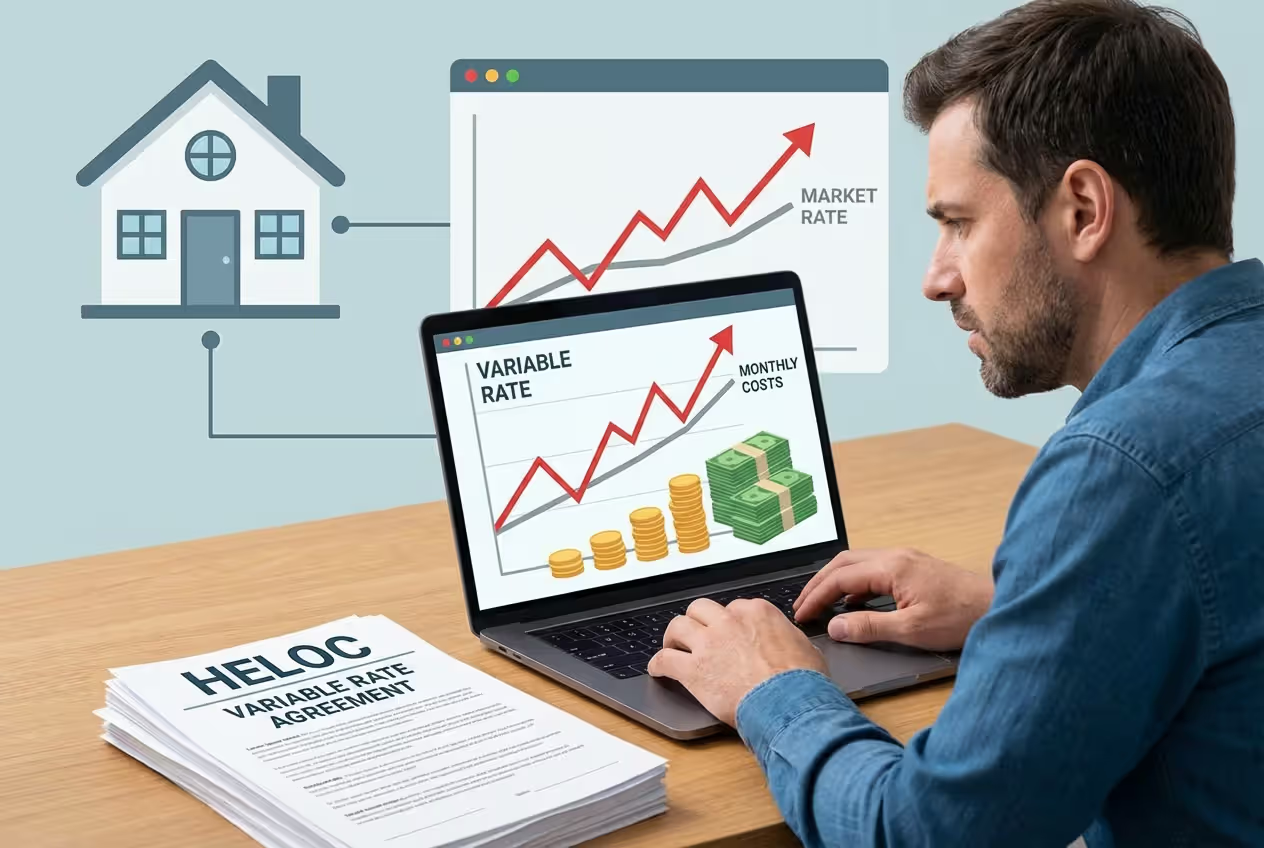
Here's what catches people off guard: rates move. Almost every HELOC ties its rate to the prime rate, which the Federal Reserve essentially controls. When the Fed nudges rates up by half a percent, your HELOC rate climbs right along with it, usually within a month or two. Right now in early 2026, most HELOCs sit somewhere between 8.5% and 11%, depending on your credit score and how much equity you're tapping.
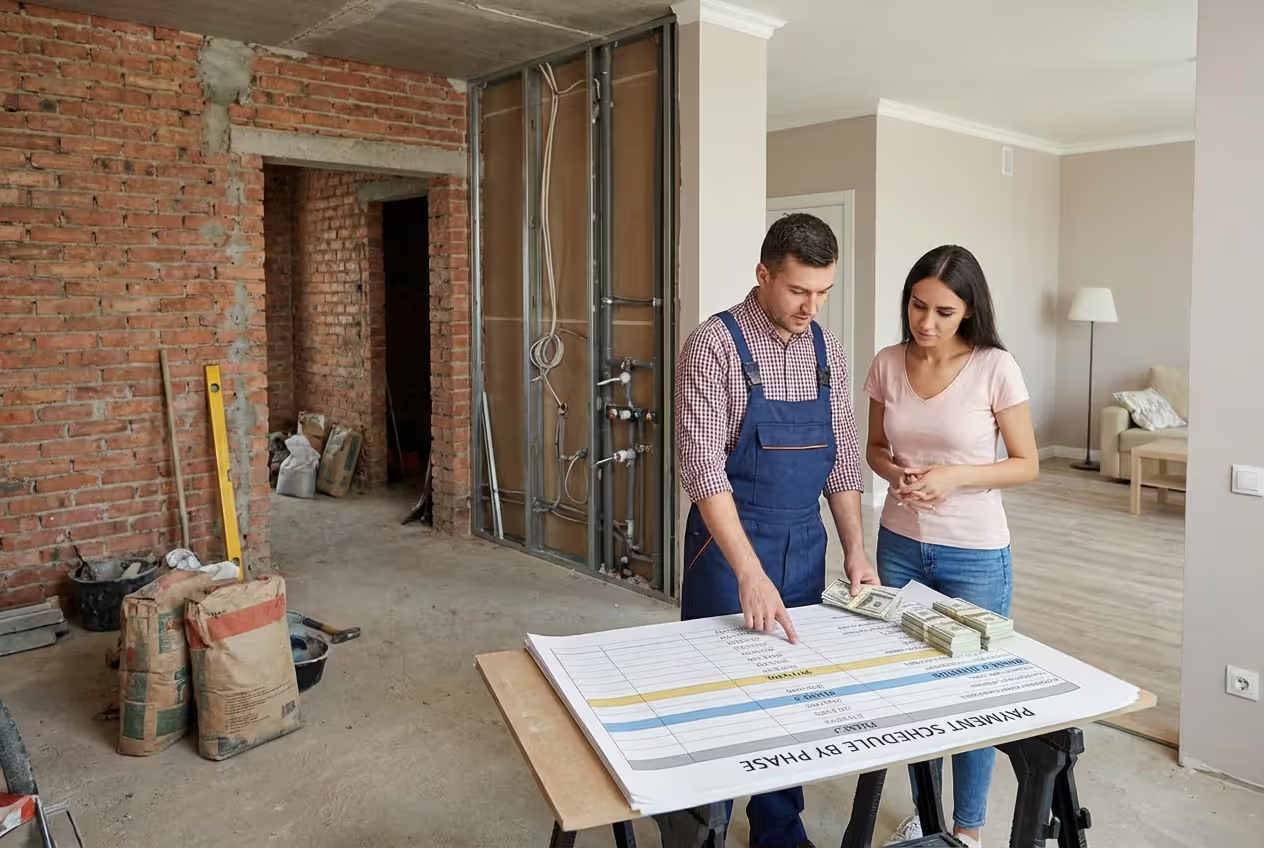
Let's say you're renovating a basement over nine months. You might pull $10,000 in month one for framing and electrical, nothing in months two through four, then $15,000 in month five for drywall and flooring. With revolving equity borrowing, you're only paying interest on $10,000 for those first few months—not on money you haven't touched yet.
Author: Brandon Ellery;
Source: nayiyojna.com
What Is a Home Equity Loan and How Does It Work?
A home equity loan works the opposite way. You get every penny upfront, all at once. Borrow $50,000 and that full amount hits your account at closing. Your first payment? Due next month. And that payment? It'll be identical every single month until the loan's paid off, which could be anywhere from 5 to 30 years depending on what term you pick.
The rate locks when you sign. Snag an 8.25% rate in April 2026, and you'll still have 8.25% in April 2036—even if rates spike to 13% or drop to 4%. Your monthly bill never changes. Not by a dollar, not by a dime.
This consistency is the whole point for lots of borrowers. Someone financing $35,000 at 7.9% over 12 years faces about $369 monthly. That exact $369 shows up 144 times in a row. No surprises, no recalculations, no tracking financial news to see if the Fed just made your life more expensive.
You can see why certain expenses pair perfectly with this structure. Wiping out $28,000 in credit card debt? You know the exact amount. Building a $55,000 in-ground pool? The contractor gave you a final bid. Paying for $42,000 in adoption costs? The agency provided a total. Fixed, known costs match naturally with fixed, known funding.
But here's the catch—you're paying interest on everything from day one. Borrow $60,000 but only need $40,000 right away? Doesn't matter. Interest starts accumulating on the full $60,000 immediately, whether that extra $20,000 sits in your checking account or not.
Key Differences Between HELOCs and Home Equity Loans
The heloc vs equity loan difference boils down to structure, predictability, and how you access cash. Here's how they stack up side by side:
| Feature | HELOC | Home Equity Loan |
| Payment Structure | Borrow and repay multiple times during draw phase | One-time lump sum with identical monthly payments starting immediately |
| Interest Rate Type | Variable rate that shifts with market | Fixed rate locked at closing |
| Disbursement Method | Pull funds whenever needed up to credit limit | Entire amount delivered at closing |
| Flexibility | High—borrow only what you need when you need it | Low—you get everything upfront whether you're ready or not |
| Typical Term Length | 10-year borrowing window + 10-20 year payoff period | Anywhere from 5 to 30 years (10-15 most common) |
| Best Use Cases | Multi-phase projects, unpredictable expenses, emergency backup, people comfortable managing variable debt | Single large purchases, debt payoff, borrowers wanting payment certainty and rate protection |
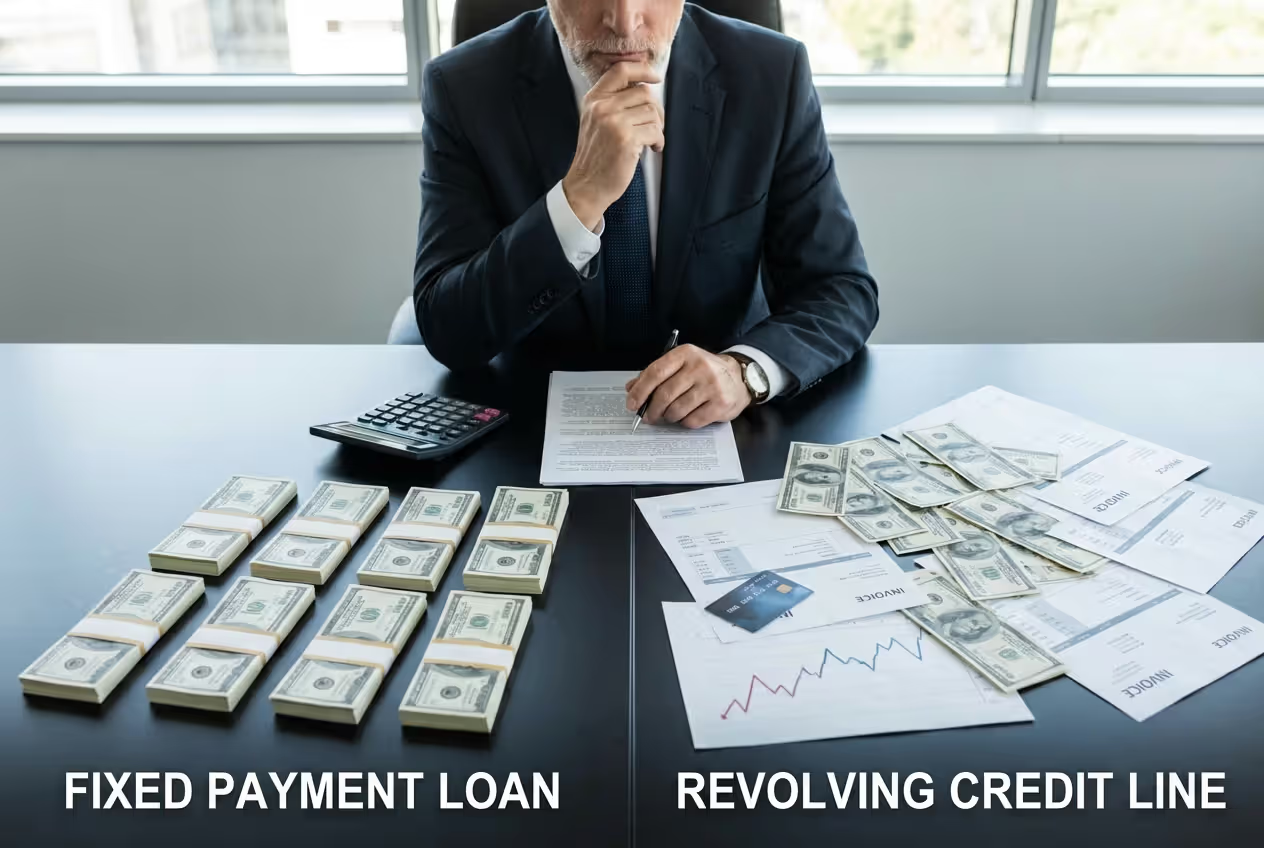
Fixed Payment vs Revolving Credit Structure
With a home equity loan, your budget gets simple. Finance $45,000 at 8.0% over 15 years and you owe roughly $430 monthly. Month 1? $430. Month 87? Still $430. Month 180? You guessed it—$430. You can write that number in pen.
HELOCs demand more attention. Your payment changes based on two moving parts: how much you currently owe and what interest rates are doing. Withdraw $25,000 in February, pay back $7,000 in April, then borrow another $12,000 in September—each statement shows a different balance. If rates jump 0.5% somewhere in that timeline, you're paying more per dollar borrowed too.
Some people love this flexibility. My neighbor used a HELOC for kitchen and bathroom remodels spread across 14 months, pulling money as each phase wrapped up. Others hate the unpredictability—especially folks who make minimum payments during the draw period and then get walloped when the repayment phase starts requiring principal payments for the first time.
Here's a mistake I see constantly: treating the 10-year draw period like free money because you're only covering interest. Then year 11 arrives, the repayment period starts, and suddenly your $180 monthly interest-only payment balloons to $650 because now you're actually paying the loan back. That shock sends people scrambling.
Author: Brandon Ellery;
Source: nayiyojna.com
Interest Rate Differences and Cost Over Time
HELOCs typically launch with lower rates than home equity loans—sometimes half a percentage point cheaper. In spring 2026, you might qualify for a HELOC at 8.0% while home equity loans are priced at 8.6%. Sounds great, except that HELOC rate won't stay at 8.0% if the Fed keeps hiking.
Picture two neighbors, both borrowing $50,000. Neighbor A grabs a HELOC at 8.0% variable. Neighbor B takes a home equity loan at 8.6% fixed for 15 years. Six months later, the Fed raises rates three times. Neighbor A's rate climbs to 9.25%. Now who's got the better deal? Neighbor B's payment hasn't budged.
Total interest cost also depends heavily on repayment speed. HELOCs that let you coast on interest-only payments for 10 years rack up significantly more total interest—assuming you actually coast. A $60,000 HELOC with 10 years interest-only at 9.0%, followed by 15 years paying both principal and interest, might cost you around $66,000 in total interest. That same $60,000 in a 15-year home equity loan at 8.6%? You'd pay roughly $46,000 in interest. That's a $20,000 difference created entirely by delaying principal repayment.
When a HELOC Is the Better Choice
Author: Brandon Ellery;
Source: nayiyojna.com
HELOCs shine when flexibility beats predictability in your personal financial hierarchy. Real estate investors I know love them because they can tap funds for property repairs across multiple rentals without borrowing one massive sum that sits idle generating interest.
When heloc is better than equity loan scenarios include:
Long-timeline home improvements. Renovating your whole house over 18 months? A HELOC lets you draw $18,000 for foundation work in month two, another $22,000 for electrical and plumbing in month seven, then $14,000 for finish work in month fifteen. Each withdrawal matches actual contractor invoices, and you can throw extra money at the principal whenever you get a bonus or tax refund.
Emergency backup fund. Some homeowners open a HELOC without touching it, keeping it as a financial safety net. Lose your job or face unexpected medical bills? The credit line's ready. Zero interest until you actually borrow. This only works if you've got ironclad discipline not to raid it for a boat or vacation.
Betting on falling rates. Borrowers expecting rates to drop might accept a variable-rate HELOC, anticipating their cost will decline as the market moves. Fair warning—this is financial speculation. Nobody truly knows where rates are heading in 2026 and beyond. You're essentially gambling with your home equity.
Short-term needs with clear repayment. Need $30,000 for eight months and you've got an inheritance or property sale definitely coming? A HELOC's lower starting rate could save you several hundred dollars versus a fixed-rate option. Just make absolutely sure that repayment source is concrete, not wishful thinking.
HELOCs work beautifully for disciplined borrowers who treat them like tools, not toys. Paying down principal during the draw period and staying comfortable with rate fluctuations can generate genuine savings. But if you're someone who tends to carry balances indefinitely, or if financial uncertainty keeps you up at night, that variable rate will create more stress than it's worth
— Jennifer Marks
When a Home Equity Loan Is the Better Choice
Home equity loans work best when you value certainty and know exactly how much you need. The fixed payment vs revolving equity borrowing decision often comes down to personality and habits as much as pure math.
When home equity loan is better situations include:
Specific one-time expenses. Financing a $52,000 camper? Paying $38,000 for a wedding? Covering $47,000 in IVF treatment? Costs with firm price tags align perfectly with lump-sum funding. You borrow your precise need and that unchanging payment slots right into your monthly budget.
Consolidating high-rate debt. Converting $45,000 in credit card balances at 24% APR into a home equity loan at 8.3% saves massive money on interest. The structured payment keeps you moving toward payoff, and you physically cannot re-borrow—which helps prevent the debt cycle trap that snares credit card users.
Protection from rate increases. Think rates are climbing, or just want to eliminate rate uncertainty? Locking today's rate delivers real peace of mind. Finance in March 2026 at 8.4%, and you're completely insulated if rates hit 12% by March 2027.
Preferring simplicity. Some people strongly prefer set-it-and-forget-it products. One payment, one rate, one payoff date. No monitoring financial news, no surprise payment jumps, no monthly decisions about how much to withdraw.
Built-in payoff discipline. Required principal-and-interest payments from month one ensure your balance shrinks steadily. HELOCs allowing interest-only payments can trap undisciplined borrowers in endless debt when they avoid reducing what they actually owe.
The biggest mistake? Borrowing more than you need "just in case." That extra $15,000 cushion costs you interest every month whether you touch it or not. Borrow precisely what you've verified you need—no more.

Author: Brandon Ellery;
Source: nayiyojna.com
Comparing HELOC and Home Equity Loan Rates and Terms
Comparing heloc rates and terms effectively means looking past advertised rates. A HELOC marketed at 7.8% might include $450 annual fees plus 0.75% origination costs. A home equity loan at 8.4% might carry zero ongoing fees and minimal closing costs. Real expense encompasses every charge across your expected borrowing timeframe.
In 2026's market, most lenders price HELOCs as prime rate plus your personal margin. Prime's sitting at 7.5%, your assigned margin is 1.25%, so your starting rate becomes 8.75%. Your specific margin hinges on credit score (740+ gets best pricing), combined loan-to-value ratio (80% or lower is ideal), and debt-to-income ratio (under 43% preferred).
Home equity loan rates typically run 0.25% to 0.75% higher than HELOC starting rates because you're buying rate insurance. That premium purchases protection—your rate cannot jump, even when prime surges 3%.
Term selection affects both monthly bills and lifetime interest. Take $50,000 at 8.4%: - 10 years: $616 monthly, $23,920 total interest - 15 years: $490 monthly, $38,200 total interest
- 20 years: $431 monthly, $53,440 total interest
Shorter terms hurt monthly but save thousands overall. HELOCs generally span 20 to 30 years combined (draw period plus repayment), though faster payoff typically has no penalties.
When shopping lenders, compare: - Starting rate and how it's calculated (HELOCs: which index? what's your margin?) - Closing costs (application fees, appraisal charges, title work, origination points) - Ongoing charges (annual fees, inactivity penalties, early closure costs) - Draw and repayment specifications (HELOCs: how long can you borrow? what happens after?) - Prepayment penalties (rare but check—some lenders charge for early payoff)
Credit unions frequently beat big banks on rates by 0.5% to 0.75%, with lower fees too. Online lenders compete aggressively but may lack local help when issues pop up. Get quotes from at least three lenders—mix credit unions, regional banks, and online specialists.
Loan-to-value ratio massively impacts approval and pricing. Most lenders cap combined LTV (first mortgage plus new borrowing) at 80% or 85%. House worth $350,000 with a $210,000 existing mortgage means you've got $140,000 equity. At 80% LTV, total borrowing maxes at $280,000, minus your current $210,000 mortgage leaves $70,000 accessible. Borrowing near maximum limits usually means higher rates and tougher qualification.
Frequently Asked Questions About HELOCs and Home Equity Loans
The heloc vs home equity loan decision isn't about one product being objectively superior—it's about matching financial tools to your habits, risk tolerance, and specific needs. HELOC flexibility serves borrowers with evolving expenses and solid discipline for managing revolving credit responsibly. Home equity loan fixed structure protects people prioritizing budget certainty and wanting rate protection.
Before committing, stress-test your choice. Considering a HELOC? Calculate your payment if rates jump 2.5% during the draw period. Can you still afford it? Leaning toward a home equity loan? Confirm you're borrowing the right amount—not too much (paying unnecessary interest) and not too little (forcing a second borrowing later).
Both products put your home at foreclosure risk. Default on payments and lenders can foreclose, regardless of which product you chose. Borrow only what you can realistically repay, keep emergency reserves separate from home equity access, and develop clear plans for how borrowed funds will improve your financial position or quality of life. Used strategically, either a HELOC or home equity loan becomes powerful financial leverage. Used carelessly, either can threaten the equity you've spent years building.