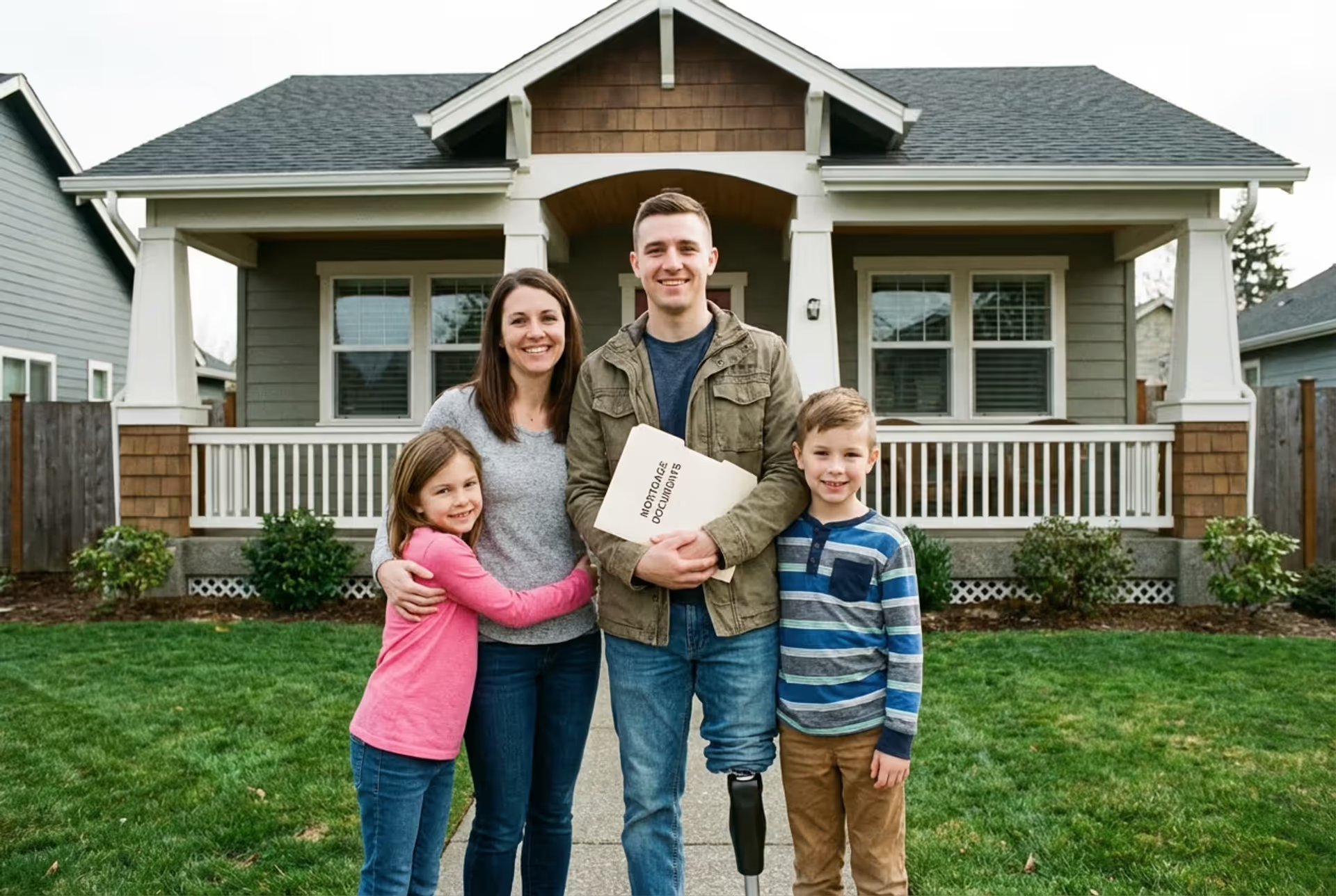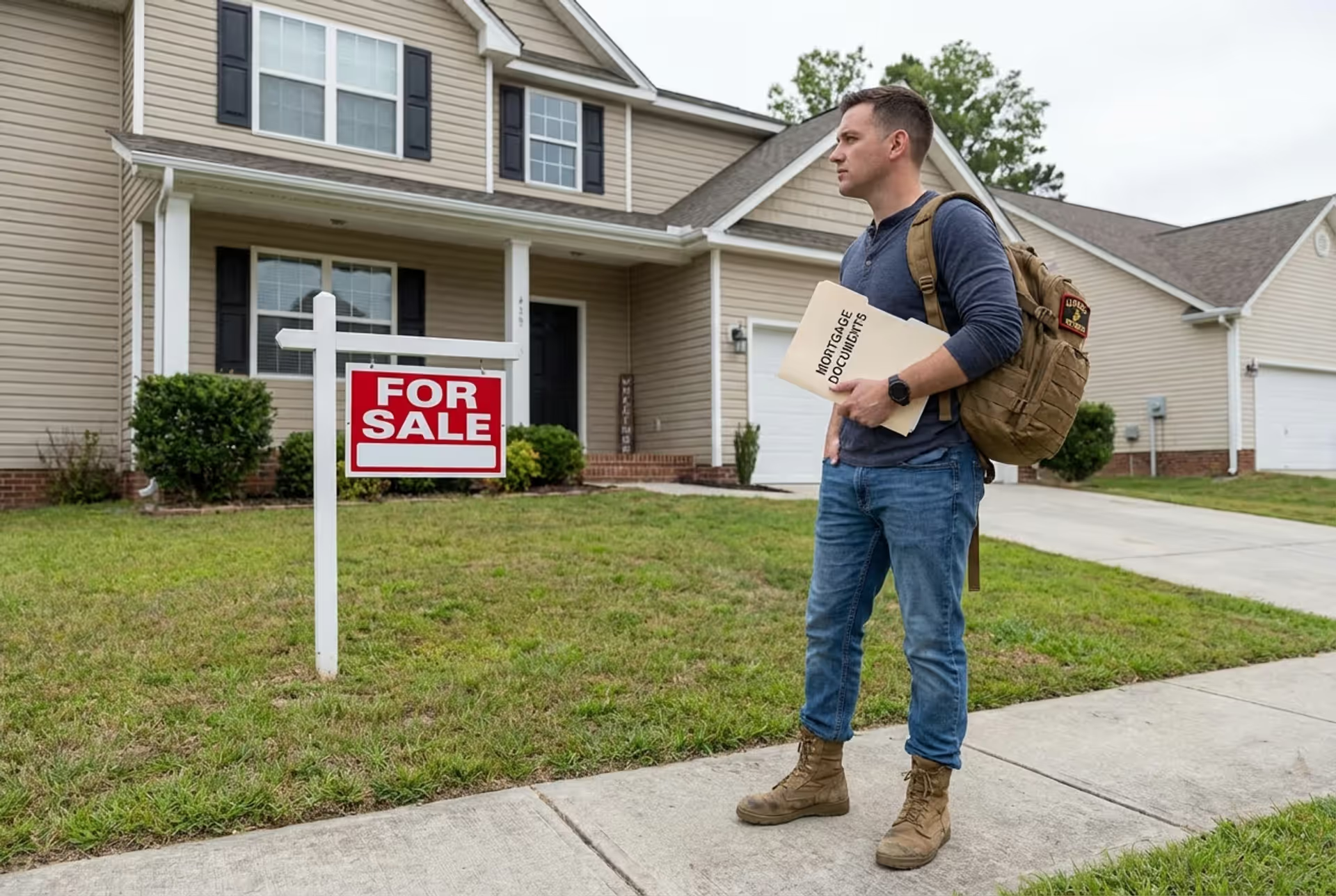
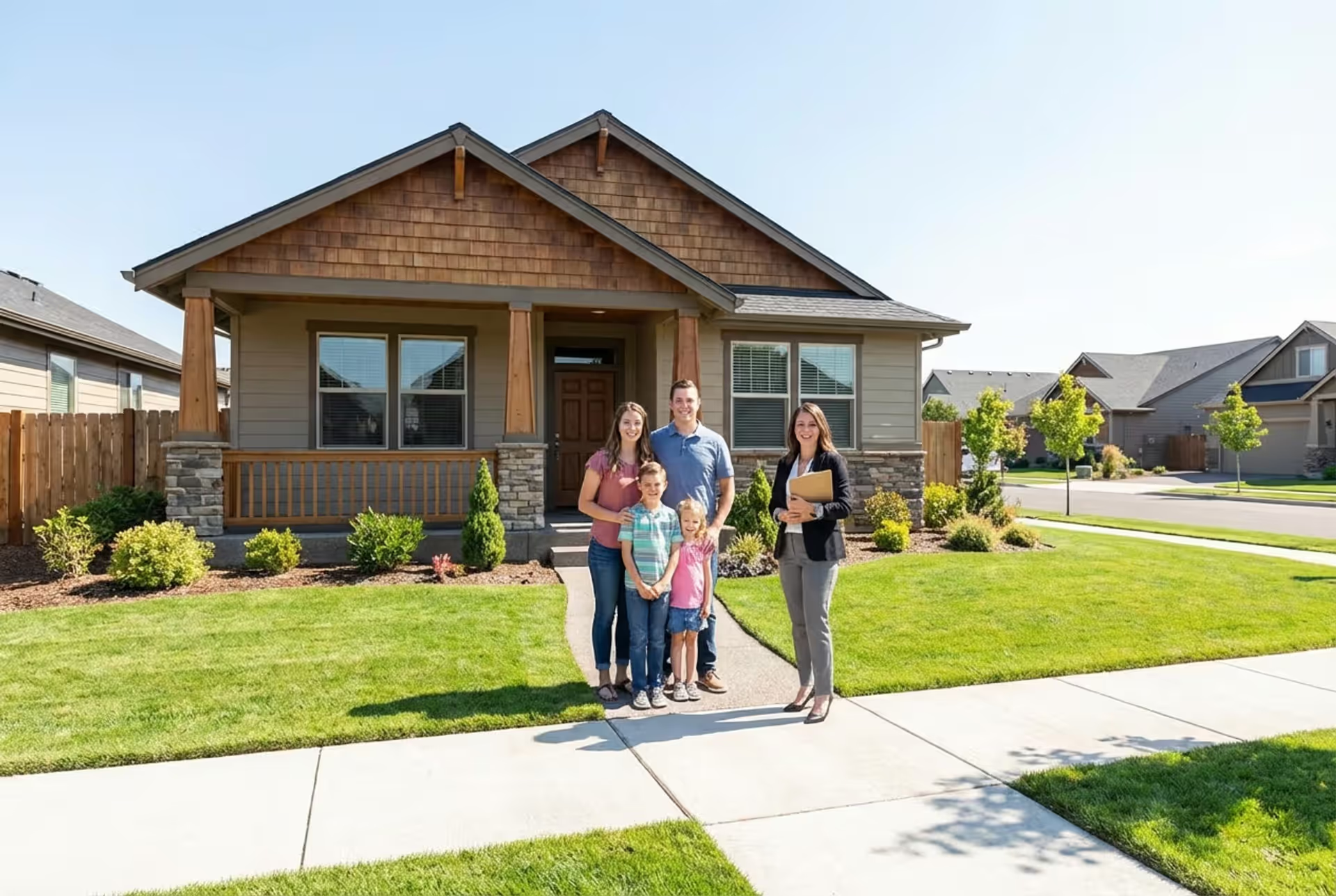
Young family standing outside a suburban home with a mortgage advisor
USDA Loan Requirements Guide

Content
Buying a house without putting anything down sounds too good to be true—until you discover USDA loans. These government-backed mortgages help buyers in eligible areas become homeowners with zero down payment, but you'll need to meet specific standards around your income, where you're buying, your credit situation, and how you plan to use the home. Understanding what qualifies you (and what doesn't) before you start house hunting saves frustration and wasted time.
What Is a USDA Loan and Who Qualifies
The U.S. Department of Agriculture created this mortgage program to boost homeownership in less densely populated parts of the country. You'll find two main options: most people use the guaranteed program, where a regular mortgage company makes your loan and USDA provides insurance to the lender. The second option—direct loans—comes straight from USDA for lower-income applicants (those earning 50-80% of their area's median income) and sometimes includes interest rate subsidies that can drop your rate below 2%.
Most buyers work with the guaranteed option through banks, credit unions, or mortgage brokers. You won't pay anything upfront for your down payment, you'll typically get better interest rates than many conventional loans, and you can borrow up to the home's appraised value.
Getting approved means checking four main boxes: First, everyone living in your household can't collectively earn more than the income ceiling for your county. Second, the property needs to sit in a USDA-approved location. Third, you're buying it to live in as your primary home, not as a rental or vacation spot. Fourth, your credit history and monthly debt load must show you can handle the payments. Miss any of these four, and your application won't make it through underwriting.

Author: Brandon Ellery;
Source: nayiyojna.com
Income Limits and How They're Calculated
Here's where many buyers get tripped up. USDA sets maximum income levels because the program aims to help moderate-income families. For 2026, the guaranteed program generally caps household income at 115% of the area median. But that number jumps around significantly depending on where you live.
A four-person household in Buncombe County, North Carolina might qualify with income up to $103,500, while a similar family in San Luis Obispo County, California could earn $128,850 and still qualify. Cost of living differences explain these gaps.
The tricky part? USDA counts income from everyone age 18 or older who'll live in the house, whether they're on the loan or not. Let's say you and your spouse earn $75,000 combined. Sounds safe, right? But if your 20-year-old son lives with you and brings in $35,000 from his job, the USDA sees $110,000 in household income. That extra $35,000 might push you over the limit depending on your county.
What counts as income? Everything. Your base salary, overtime pay, bonuses, commissions, tips, Social Security benefits, pension payments, alimony, child support, disability income, investment returns, rental income from other properties you own, and self-employment profits. If money comes into your household regularly, USDA wants to know about it.

Author: Brandon Ellery;
Source: nayiyojna.com
For income that varies—like freelance work, seasonal jobs, or business profits—lenders average the last two years. You can't qualify based on one great year if the previous year was weak. They're looking for stability and consistency.
You do get some breaks. USDA subtracts $480 per year for each child under 18 living with you. If you pay for childcare so you can work, those costs reduce your countable income. Have an elderly parent or disabled adult living with you? More deductions. These adjustments might save your application if you're sitting right at the income threshold.
How to Check If Your Income Qualifies
Visit the USDA Rural Development website and find their income eligibility tool. You'll enter your state, county, number of household members, and total household income. The system spits out an answer in seconds—though it's preliminary until a lender verifies everything with documentation.
Your lender will want recent pay stubs (usually covering 30 days), W-2 forms from the past two years, and signed authorization to verify your employment directly with your employer. Expect them to call your boss to confirm you still work there, what you earn, and whether your job appears stable.
Self-employed? Buckle up for more paperwork. You'll provide two years of personal tax returns with all schedules, two years of business returns (the specific form depends on how your business is structured), a current profit and loss statement, and a balance sheet for your company. Lenders scrutinize business income carefully, averaging two years while backing out one-time income spikes or unusual expenses.
What Counts as Household Income
The confusion here is real. Remember: every adult (18+) living in the home contributes their income to the calculation, related to you or not.
Your 19-year-old working at Target while attending community college? Her income counts. Your retired mother-in-law moving into your spare room with her $2,100 monthly pension? That counts too. Your 22-year-old nephew crashing with you while he gets on his feet and earning $40,000? Yep, that counts.
Kids under 18 don't contribute countable income, but their presence helps you through those dependent deductions. Foster children and live-in home health aides typically don't count as household members for income purposes, but you'll need documentation proving their status.
Property Location and Eligibility Rules
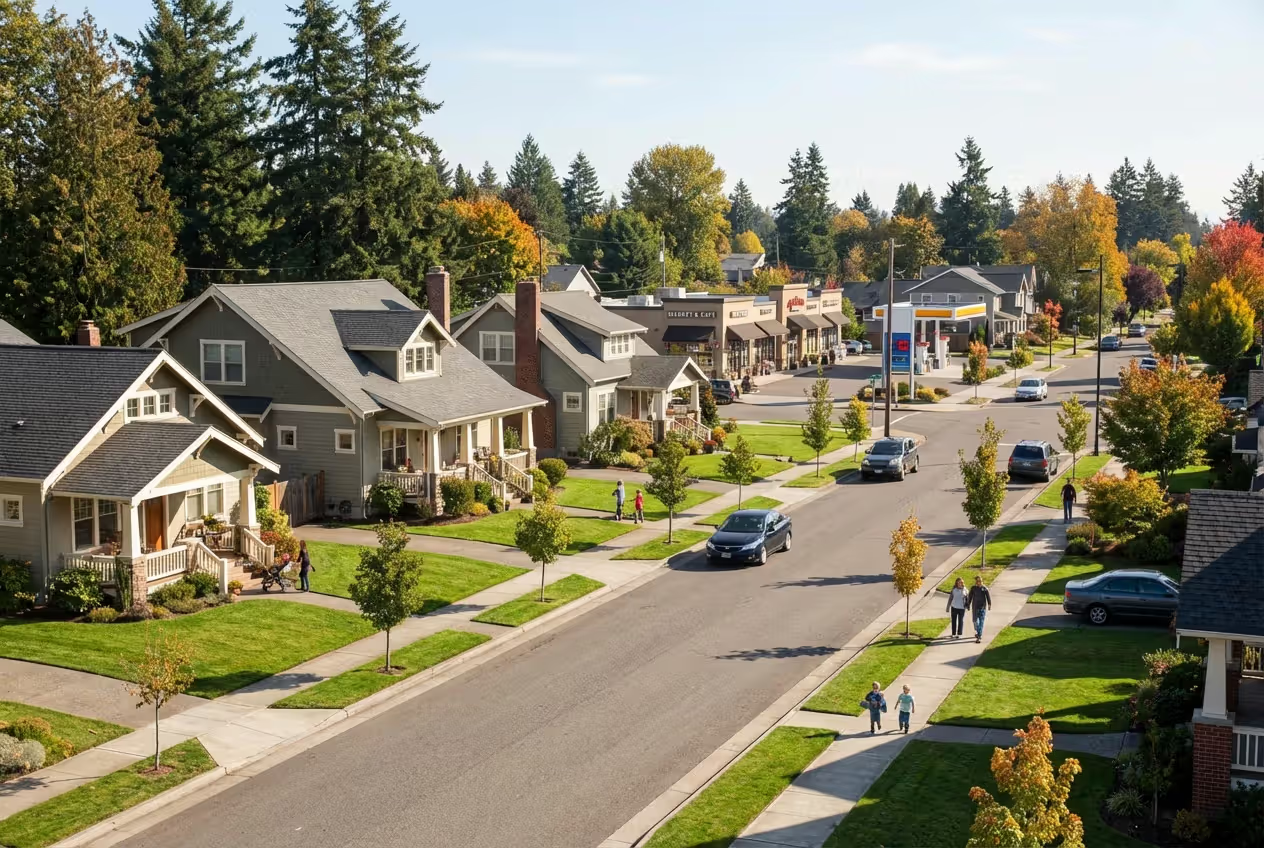
When most people hear "USDA" and "rural," they picture farmland and dirt roads. Surprise: plenty of suburban neighborhoods qualify, including some towns with populations reaching 35,000. The definition of "rural" is looser than you think.
USDA bases eligibility on census data, population density, and proximity to major cities. They update their maps periodically, so areas that qualified five years ago might not today if the population boomed. The reverse happens too—some formerly ineligible zones now qualify as the agency adjusts its criteria.
You absolutely must verify the property address before making an offer. Go to the USDA Property Eligibility website and enter the complete street address. The tool gives you an immediate yes or no. I've seen situations where one side of a street qualifies but the other doesn't because of how city limits are drawn.
Suburbs just outside city boundaries often qualify. Small towns surrounded by farmland usually work. Those newer subdivisions built in formerly agricultural counties 15 miles from the interstate? Frequently eligible. But if you're looking inside city limits of any decent-sized town, chances drop significantly.
The home itself must be a single-family residence—that includes detached houses, townhouses, condos in USDA-approved projects, and modular homes permanently attached to land you'll own. Manufactured homes work if they're built to HUD standards, constructed after June 1976, and placed on land you're purchasing (not in a mobile home park where you rent the lot).
Investment properties don't qualify. Period. Same goes for working farms generating substantial agricultural income or vacation homes you'll use occasionally. This program is strictly for buying the place where you'll live full-time.
Author: Brandon Ellery;
Source: nayiyojna.com
Credit Score and Financial Guidelines
Most lenders want to see a 640 credit score minimum for automated underwriting approval. Scores between 580 and 639 can still work through manual underwriting, but you'll face tougher scrutiny. The underwriter will look for compensating factors—solid savings, low debt, steady employment—to offset the lower score.
Your credit score is just the starting point. Underwriters dig into your actual credit behavior. Recent late payments raise bigger red flags than old ones. Three 30-day late payments in the past year worry them more than one 60-day late mark from four years ago. They want to understand why you had credit problems. Medical emergency? Temporary job loss? Messy divorce? Context matters because it shows whether you're a risky borrower or someone who hit a rough patch and recovered.
Your debt-to-income ratio can't exceed 41% for most borrowers. That's all your monthly debt payments (including the new mortgage) divided by your gross monthly income. Some applicants with strong compensating factors push to 44%, but don't count on it. The housing ratio—just your mortgage payment divided by gross income—typically maxes at 29%.
That mortgage payment includes more than principal and interest. Add property taxes, homeowners insurance, HOA dues if applicable, and the USDA guarantee fee. The guarantee fee currently runs 0.35% annually, divided into monthly payments. On a $200,000 loan, that's about $58 per month—not huge, but it factors into your debt ratio.
Filed bankruptcy? You'll wait three years from the discharge date for Chapter 7, or 12 months of on-time payments for Chapter 13. Foreclosure also requires a three-year waiting period. Exceptions exist for circumstances beyond your control—maybe you lost your job when your employer relocated out of state, or you had catastrophic medical bills. You'll need solid documentation proving the hardship and showing you've rebuilt your finances.
Collections and charge-offs won't automatically kill your application, but unpaid federal debts will. Owe back taxes? Defaulted on federal student loans? You're not getting USDA financing until those are resolved. The federal government won't approve a mortgage for someone who owes other federal agencies money.

Author: Brandon Ellery;
Source: nayiyojna.com
Occupancy and Use Requirements
You must move into the house within 60 days of closing and live there as your main home. USDA isn't helping you buy rental property, a weekend getaway, or a house to flip. You're buying a home to occupy.
What does "primary residence" actually mean? You spend most nights there throughout the year. Owning a vacation condo doesn't violate the rules as long as the USDA-financed house is clearly where you live most of the time. But you can't claim homestead exemption on another property or maintain your voter registration at a different address, because those actions suggest you consider somewhere else your real home.
Military families get special consideration. Active duty service members can maintain eligibility during deployments or permanent change of station orders, assuming they occupied the home initially and intend to return. A spouse can satisfy the occupancy requirement while the service member is stationed elsewhere.
Job relocations create problems. Say you close on your USDA home in March, then in September your employer offers you a position 150 miles away. You can't convert the USDA house into a rental property. Your options are selling or refinancing out of the USDA loan before renting it out. The agency monitors compliance through various means including cross-referencing tax returns.
Violating occupancy rules brings serious consequences. Converting your USDA-financed home to a rental without refinancing constitutes loan fraud. USDA can demand immediate full repayment of your loan and pursue civil penalties. Lenders report violations to federal authorities, potentially triggering criminal fraud charges in extreme cases.
Required Documents and Application Process
You'll submit similar documentation to any mortgage, plus some extras related to household income verification and property eligibility. Getting organized early speeds up approval and prevents last-minute document scrambles that delay closing.
Start with personal identification—driver's license, Social Security card, proof of citizenship or legal residency if applicable. Married couples need a marriage certificate. Divorced applicants should have their divorce decree handy, especially if it involves alimony or child support.
Income and Employment Documentation
W-2 employees provide their two most recent pay stubs showing year-to-date earnings, W-2 forms from the past two years, and signed authorization for the lender to verify employment. The lender will contact your employer to confirm you currently work there, verify your position and salary, and ask about your job stability.
Business owners face more extensive documentation requirements. Expect to provide two years of personal tax returns with all schedules, two years of business tax returns (Form 1120, 1120S, or 1065 depending on your business structure), a current profit and loss statement, and your business balance sheet. The underwriter analyzes trends, calculating sustainable income by averaging two years and adjusting for one-time items like equipment sales or unusual expenses.
Retirement income requires award letters from Social Security, pension administrators, or retirement account custodians showing monthly amounts and confirming the benefits will continue indefinitely. Rental income from other properties needs lease agreements plus two years of tax returns showing Schedule E rental income and expenses.

Author: Brandon Ellery;
Source: nayiyojna.com
Property-Related Documents
The purchase contract kicks off property documentation. Your lender orders a property eligibility verification, appraisal, and title search. The appraisal must confirm the house meets USDA minimum property standards—sound structure, functioning electrical and plumbing systems, adequate heating, and access to safe drinking water.
Wells and septic systems need testing and approval. Wells must produce adequate water with acceptable bacteria and nitrate levels confirmed through laboratory testing. Septic systems require inspection confirming proper operation and adequate capacity for the home's bedroom count.
You'll need a homeowners insurance quote showing replacement cost coverage. The policy must equal or exceed the loan amount and name the lender as mortgagee. Properties in flood zones require separate flood insurance.
Common USDA Loan Mistakes to Avoid
Certain mistakes sink applications again and again. Topping the list? Falling in love with a house before verifying the location qualifies. Buyers view properties, submit offers, enter contract, then discover the address doesn't meet USDA eligibility. Always—always—check location eligibility before making any offer.
Income miscalculations rank close behind. Applicants forget about a household member's earnings or misunderstand which income sources count. Maybe your mortgage broker initially qualifies you based just on your W-2 income, but then underwriting denies the loan because your adult daughter's $38,000 salary pushes household income over the limit. Disclose everyone who'll live in the house and all their income sources from day one.
Timeline expectations cause headaches. USDA loans take longer than conventional financing because of extra steps—property eligibility verification, household income certification, and conditional approval from USDA for direct loans. Budget 45-60 days from application to closing, potentially longer during busy spring and summer homebuying seasons.
Credit surprises emerge when applicants skip pulling their credit reports before applying. Small issues you forgot about—that $250 medical collection, that late payment from a credit card you rarely use—can delay closing by weeks while you obtain payoff receipts and updated credit documentation. Pull your credit reports from all three bureaus at least 60 days before applying, giving yourself time to address problems.
I've seen so many qualified buyers miss out because they assumed USDA financing only works for farms or houses in the middle of nowhere.Just last month I closed a USDA loan for a townhouse in a suburban development with a shopping center two blocks away. The 'rural' designation surprises people, and too many qualified buyers never explore the program because they incorrectly assume their preferred neighborhoods won't qualify
— Jennifer Martinez
Making major financial changes during your application creates avoidable denials. Don't finance a car, open new credit cards, or change jobs between initial approval and closing. Each action requires re-verification and could alter your debt ratios or employment stability profile.
USDA Loan Requirements at a Glance
| Requirement Category | What You Need to Know | Specific Limits |
| Income Caps | Total household income for all adults must stay below 115% of area median; varies by county and household size | Typically $95,000-$128,000 depending on location |
| Credit Requirements | 640 minimum for automated approval; 580-639 possible through manual underwriting | 640+ recommended for smooth approval |
| Location Rules | Property must be in USDA-eligible rural area; verify at Property Eligibility website | Generally towns under 35,000 population |
| Occupancy Rules | Must be your primary residence; move in within 60 days and continue living there | No rental or investment use allowed |
| Debt Ratio Limits | Total monthly debts can't exceed 41% of gross monthly income (29% for housing payment alone) | May reach 44% with strong offsetting factors |
| Down Payment | Zero down payment required for guaranteed loans | 100% financing available |
| Property Types | Single-family homes, townhomes, approved condos, qualifying manufactured homes | Must meet USDA minimum property requirements |
Frequently Asked Questions
USDA loan requirements create a clear pathway to homeownership for moderate-income buyers in eligible areas, but success depends on understanding how income limits, location rules, credit standards, and occupancy requirements work together. The zero-down benefit makes homeownership accessible years earlier than saving for a traditional down payment, while competitive interest rates and modest guarantee fees keep monthly payments manageable.
Preparation separates successful applications from denials. Verify property eligibility before touring homes, calculate total household income honestly, review your credit report for issues, and gather documentation early. Working with an experienced USDA lender prevents common mistakes and streamlines the approval process.
The program's rural focus opens homeownership opportunities in communities offering lower cost of living, shorter commutes than urban centers, and family-friendly environments. Many buyers discover that "rural" includes suburban developments with excellent schools, shopping access, and modern amenities—far from isolated farmland. If you've delayed homeownership because of down payment barriers, exploring USDA eligibility might reveal you're closer to buying than you realized.