

Couple reviewing mortgage documents at home with laptop and calculator
How to Get an FHA Loan in 2025

Content
Finding a mortgage when your credit history isn't spotless or your savings account looks more modest than you'd like? That's exactly why FHA financing exists. These government-backed mortgages have helped millions of Americans become homeowners despite credit scores that would make conventional lenders nervous or down payment funds that wouldn't cover traditional requirements.
The journey from application to keys involves specific documentation, multiple approval stages, and timing that varies based on how prepared you are. Many buyers waste weeks—or lose their dream homes—because they didn't understand what lenders need or when they need it. Here's everything that actually happens when you pursue FHA financing, broken down into manageable steps.
What Is an FHA Loan and Who Qualifies?
The Federal Housing Administration backs these mortgages without actually lending money. Here's how it works: approved banks and mortgage companies make the loans, while the FHA promises to cover losses if borrowers default. This safety net lets lenders take chances on buyers they'd otherwise reject.
When you're figuring out how to qualify for an fha mortgage, you'll encounter requirements more forgiving than conventional financing. Credit scores down to 500 can work, though realistically most lenders won't go below 580 no matter what the FHA allows. Why? Their internal policies layer additional restrictions on top of government minimums.
Your debt-to-income ratio—how much of your monthly earnings goes toward debt payments—usually needs to stay under 43%. That includes your projected mortgage payment, credit cards, car loans, student debt, and any other obligations. Some lenders stretch to 50% if you've got hefty savings or other strengths in your application.
Two consecutive years of employment history reassures lenders you'll keep earning. Job hopping within the same industry rarely causes problems. Switching from teaching to sales? That requires explanation. Gaps between jobs need documentation—medical issues, returning to school, or caring for family members are acceptable reasons.
The property must be your main home. Rental properties you're buying as investments won't qualify, and neither will vacation cabins you'll visit occasionally. The house itself has to meet safety standards HUD established, which we'll get into when discussing appraisals.

Author: Hannah Kingsley;
Source: nayiyojna.com
FHA Loan Requirements You Must Meet
The exact standards for how to qualify for an fha mortgage shift based on your financial profile. Here's what the government requires in 2025:
Credit Score Minimums
A score of 580 or better unlocks the 3.5% minimum down payment option. Scores from 500 to 579 bump that requirement to 10% down. Real talk: finding a lender willing to work with sub-580 scores is tough. Most set their floor at 580 regardless of how much you're putting down.
Previous bankruptcies don't permanently disqualify you. Chapter 7 requires a two-year waiting period after discharge. Foreclosures need three years in your rearview mirror. You can sometimes shorten these waits by proving circumstances beyond your control caused the financial crisis—job loss during a recession, catastrophic medical bills, or similar hardships.
Down Payment and Loan Limits
That 3.5% can come entirely from gifts. Your parents can hand you the full amount without you contributing a dime of your own savings. Many states and cities also run assistance programs that provide down payment grants or low-interest loans layered with your FHA financing.
County-by-county limits adjust each year based on local housing costs. Low-cost areas start at $498,257 for 2025, while expensive markets reach $1,149,825. These caps apply to single-family homes; duplexes, triplexes, and fourplexes have higher thresholds since you can rent out the other units.
Debt-to-Income Ratio
Housing expenses alone should eat up no more than 31% of your gross monthly income (the front-end ratio). Total debts including the mortgage should stay below 43% (the back-end ratio). Lenders bend these rules for borrowers with excellent credit, substantial savings, or minimal jumps from current rent to new mortgage payment.
Mortgage Insurance Requirements
Every FHA loan carries two insurance charges. Up front, you'll pay 1.75% of your loan amount—most borrowers roll this into the mortgage rather than paying cash at closing. Then there's an annual premium between 0.45% and 1.05% of your balance, divided into monthly installments and added to your payment.
Put down less than 10%? That annual premium stays for the entire loan term. The only way to eliminate it is refinancing into conventional financing once you've built 20% equity. Put down 10% or more initially? The premium cancels after 11 years automatically.
| FHA Loan Requirements at a Glance | Credit Score 580+ | Credit Score 500-579 |
| Down Payment Minimum | 3.5% | 10% |
| Back-End DTI Maximum | 43% (up to 50% with strong compensating factors) | 43% (less flexibility) |
| Upfront Insurance Premium | 1.75% of loan amount | 1.75% of loan amount |
| Annual Insurance Premium | 0.45%–1.05% (permanent if less than 10% down) | 0.45%–1.05% (permanent if less than 10% down) |
| Employment Requirements | Two years consistent work history | Two years consistent work history |
| Property Standards | Must pass HUD minimum requirements | Must pass HUD minimum requirements |
Documents You Need to Apply for an FHA Loan
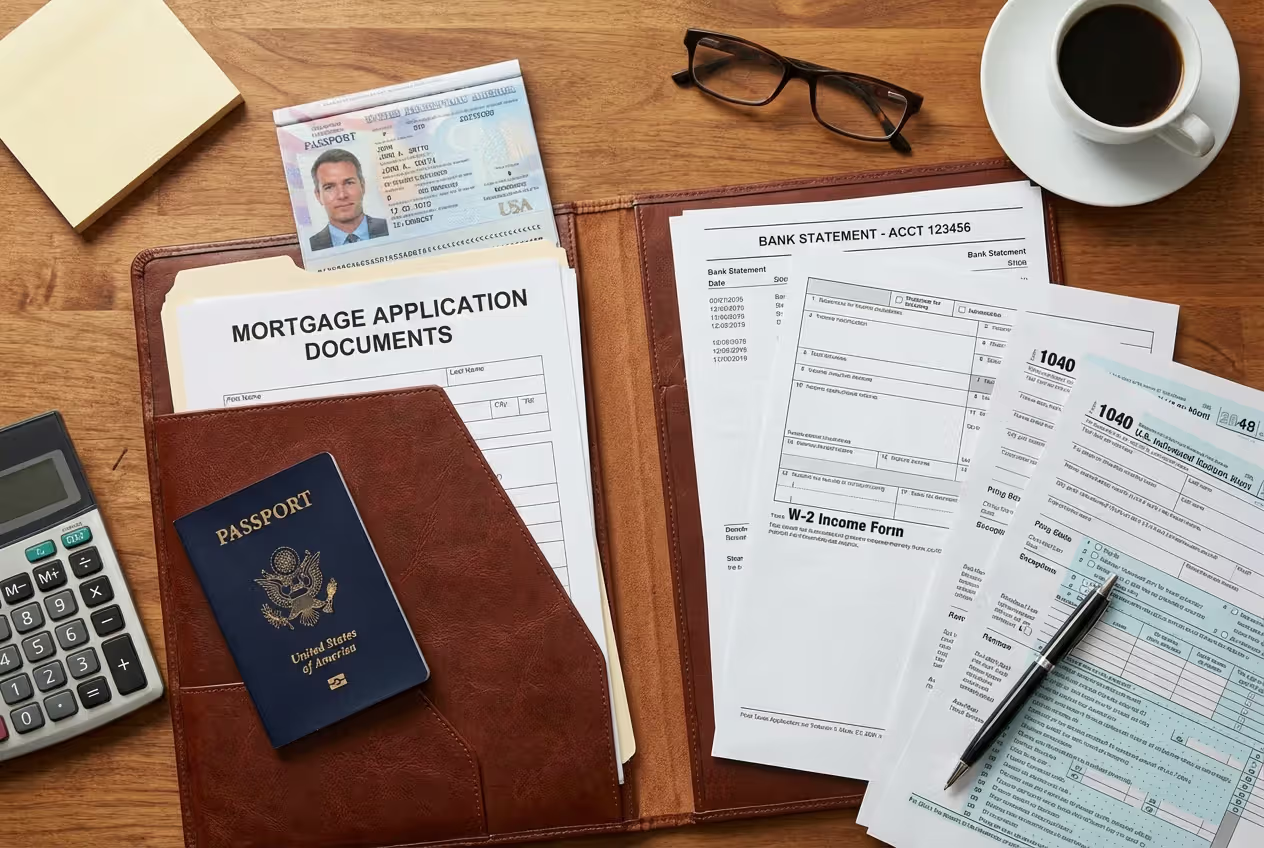
Collecting the documents needed for fha loan processing before you contact lenders saves enormous amounts of time. Incomplete files are the number one reason applications drag on for months instead of weeks.
Income Verification
Your last two pay stubs showing year-to-date totals are essential. Weekly pay? Bring four consecutive stubs. Salaried employees have straightforward verification. Commission-based income, bonuses, and overtime get averaged over 24 months—if these variable amounts are trending down, lenders might not count them at all.

Author: Hannah Kingsley;
Source: nayiyojna.com
W-2 forms from the past two years confirm your employment timeline and earnings consistency. Career changes within related fields rarely cause issues. Jumping from healthcare to restaurant management? Expect questions about why and whether your income will remain stable.
Self-employed buyers submit two years of personal returns with every schedule, plus business returns if they own 25% or more of a company. Lenders scrutinize these intensely. You'll likely need a current profit-and-loss statement (ideally CPA-prepared) showing year-to-date business performance.
Asset Documentation
Two months of statements from every bank account verify you've got money for the down payment, closing costs, and reserves. Lenders examine deposits closely to confirm acceptable sources. They're watching for borrowed money that would create hidden debts.
Large deposits—anything exceeding half your monthly income—need paper trails. If your grandmother gifted you $15,000, you'll need her signed letter stating it's a gift with no repayment expected, plus documentation showing the money moving from her account to yours.
Retirement accounts demonstrate reserves even when you're not tapping them for the purchase. If you are withdrawing 401(k) funds, bring documentation showing the withdrawal terms or loan agreement from your plan administrator.
Additional Required Documents
Government-issued photo identification verifies who you are. Your Social Security card or a W-2 showing your complete number allows credit report pulls.
Divorce decrees and separation agreements are necessary if applicable, especially when they establish alimony or child support. These obligations directly impact your debt ratios—payments you make decrease qualifying income, while payments you receive can boost it (though lenders typically require proof you've received them consistently).
Twelve months of rent payment history helps borrowers with thin credit files. Cancelled checks or bank statements showing regular rent payments prove reliability when traditional credit history is limited.
Step-by-Step FHA Loan Application Process
The fha loan application steps follow a predictable sequence, though timing varies dramatically based on your preparation and how quickly your lender processes files.
Getting Preapproved for an FHA Mortgage
Prequalification and preapproval are completely different animals. Prequalification is a casual estimate based on whatever you tell the lender verbally—no verification happens. Preapproval means a lender pulled your credit, reviewed documentation, and conditionally committed to lend you a specific amount.
Work through an FHA loan preapproval checklist gathering every document from the previous section. Complete Form 1003 (the standard mortgage application) with an FHA-approved lender. They'll check your credit, calculate debt ratios, and verify your job.
Within several days, you'll get a preapproval letter specifying your maximum loan amount. This dramatically strengthens offers on homes because sellers know you're not just window shopping—you've already cleared major financial hurdles.
Author: Hannah Kingsley;
Source: nayiyojna.com
Preapprovals last 90 days typically, sometimes 120. If house hunting takes longer, you'll update documents and possibly endure another credit check to extend the preapproval.
Submitting Your Full Application
After your offer gets accepted, you'll complete the full loan application with property details included. The lender orders both an appraisal and title search while processing your paperwork.
This stage involves intensive verification. Underwriters frequently request additional documentation—updated pay stubs if time has elapsed since preapproval, current bank statements, or written explanations for new credit inquiries that appeared recently.
Respond within 24 hours to every request. Each day you delay pushes your closing date back and risks your interest rate lock expiring. Most lenders offer 30- to 60-day locks; extending them costs money.
Home Appraisal and Inspection
FHA-mandated appraisals involve licensed appraisers from the lender's approved roster. They'll determine market value while checking whether the property satisfies HUD's minimum standards. These standards focus on safety and structural integrity—homes built before 1978 with peeling paint trigger lead concerns, stairs without handrails violate requirements, and major systems like furnaces or roofs must have useful life remaining.
Appraisals run $400 to $700 depending on location and property type. You'll pay upfront, and this fee is non-refundable even if the deal collapses.

Author: Hannah Kingsley;
Source: nayiyojna.com
Appraisals coming in below purchase price create several options: renegotiate a lower price with the seller, bring extra cash to cover the gap, or cancel the contract if you included an appraisal contingency.
Property problems identified in appraisals must get fixed before closing. Sellers typically handle repairs, though buyers sometimes pay to keep deals moving. Re-inspections confirm completed work.
FHA appraisals check basic function, not comprehensive condition. Smart buyers hire independent inspectors to find issues appraisers might miss. This costs $300 to $500 but frequently uncovers problems worth thousands.
Underwriting and Final Approval
The fha approval process peaks during underwriting, when specialists review your complete financial picture alongside property details. Automated systems handle initial processing, but humans make final decisions.
"Conditional approval" usually comes first—you're approved contingent on specific items like proof a collection got paid, explanation letters about employment gaps, or confirmation that property repairs were completed.
Clear conditions fast by submitting exactly what underwriters asked for. Partial responses or irrelevant documents just extend the timeline. Once all conditions are satisfied, you reach "clear to close" status.
Right before closing, lenders re-verify employment and assets. Expect a call to your employer within 72 hours of closing confirming you're still working there. They'll also check that bank balances haven't dropped significantly, which might indicate you can't cover closing costs.
The biggest mistake I see is borrowers making major financial changes during the approval process. Financing a car, opening new credit cards, or switching jobs can derail an FHA loan days before closing. Once you're preapproved, freeze your financial life until you have the keys in hand
— Marcus Chen
How Long Does FHA Approval Take?
Expect 30 to 45 days from application to closing for typical fha approval process timelines, though exceptionally prepared borrowers with efficient lenders sometimes close in 21 days.
Multiple factors affect your timeline. Complete documentation at submission accelerates everything—applications missing key papers can stretch to 60+ days. Appraisals often create bottlenecks; hot markets with appraiser shortages can mean two-week waits just to schedule, and required repairs add another week or two.
Your responsiveness makes an enormous difference. Underwriters prioritize files where borrowers reply to requests immediately. Let a document request sit for a week, and your file drops to the bottom of the pile.
Lender capacity impacts speed significantly. During refinancing surges, many lenders get swamped and slow down. Smaller mortgage brokers frequently process FHA loans faster than mega-banks because they juggle fewer applications.
Post-conditional approval, plan for one to two weeks to satisfy conditions and receive clear-to-close status. Closings happen at least three business days after you receive your Closing Disclosure—federal law mandates this review period.

Author: Hannah Kingsley;
Source: nayiyojna.com
Common Mistakes That Delay FHA Loan Approval
Even qualified borrowers sabotage their own applications through preventable mistakes.
Credit Missteps During the Process
New credit applications while your FHA loan processes change your debt ratios and trigger re-underwriting. That furniture store card offering 10% off can literally cost you the house. Similarly, maxing out existing credit cards increases monthly obligations and might push ratios over acceptable limits.
Paying off old collections without guidance sometimes backfires. Certain aged collections don't impact credit scores until you make a payment, which resets the reporting timeline. Always consult your loan officer before paying any old debts.
Incomplete or Inconsistent Documentation
Bank statements missing pages force lenders to request complete sets, delaying everything. Make sure every statement includes all pages, even ones that are blank.
Income documentation contradicting what you reported on your application raises immediate red flags. Claimed $60,000 annual income but tax returns show $52,000? Expect intense scrutiny and possible denial.
Self-employed buyers who write off extensive business expenses reduce their qualifying income. Tax returns showing $40,000 net income after deductions means lenders use that lower figure for debt calculations, not your gross business revenue.
Property Condition Problems
Fixer-uppers create challenges with FHA financing since properties must meet minimum standards at closing. Homes needing major repairs don't qualify unless you use an FHA 203(k) rehabilitation loan combining purchase and renovation financing—more complex but possible.
Peeling paint in pre-1978 construction requires remediation before closing. Water stains on ceilings suggest roof leaks needing inspection and repair. Broken windows, non-working appliances that convey, and tripping hazards all delay approval until corrected.
Employment Changes
Job switches during application don't automatically kill loans, but they demand additional documentation and underwriting review. Moving to similar positions with higher pay creates minimal impact. Career changes, switching from W-2 employment to self-employment, or jobs with probationary periods frequently cause denials.
Some borrowers receive job offers with better salaries and assume this strengthens applications. Unless you've started that new job and received at least one pay stub, lenders can't use that income. Starting new employment three days before closing typically results in denial because employment stability can't be verified.
Frequently Asked Questions About FHA Loans
Securing FHA financing demands preparation, patience, and meticulous attention to detail, but these mortgages remain among the most accessible options for buyers who don't fit conventional lending boxes. Low down payments combined with flexible credit standards and assumable loan features make FHA financing particularly valuable in 2025's challenging housing market.
Start with brutal honesty about your financial readiness. Pull your credit reports checking for errors, calculate debt-to-income ratios manually, and gather documentation before approaching any lenders. Choose FHA-approved lenders with strong reviews and reputations for responsive service—the cheapest rate means absolutely nothing if the lender can't close on schedule.
Maintain rigid financial discipline throughout the entire process. No new credit, no job changes, no major purchases until after you've closed. Respond instantly to all lender requests and keep your loan officer informed about any financial changes whatsoever.
The journey from application to closing involves numerous steps, each with specific requirements and potential obstacles. Borrowers who understand the complete process, prepare thoroughly, and work with experienced professionals set themselves up for smooth approvals and successful homeownership. Your FHA loan can become the foundation for building equity and achieving long-term financial stability—approach it with the seriousness and preparation it absolutely deserves.